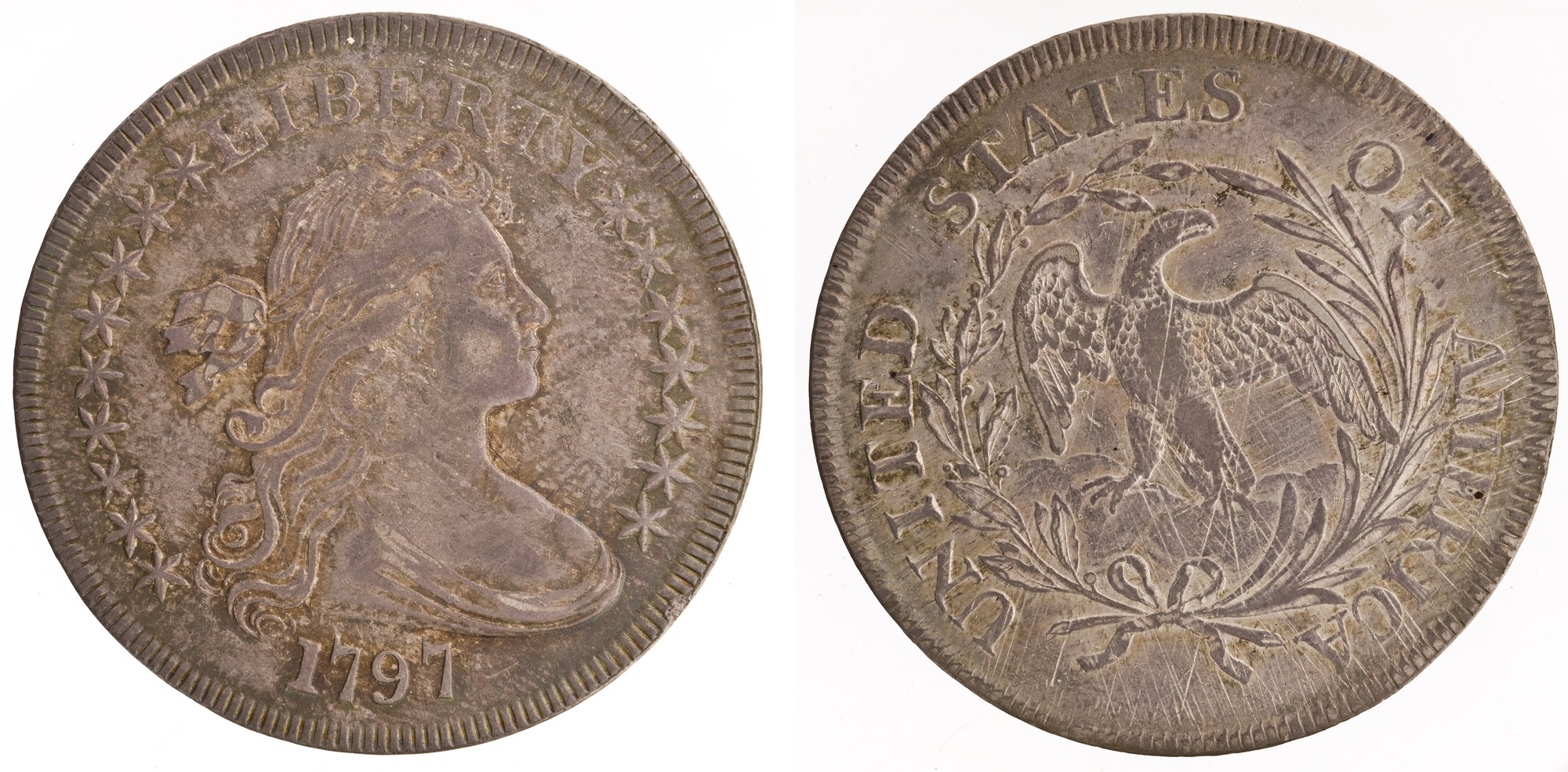
1797 Draped Bust, Small Eagle Dollar
The lowest delivery figure of any regular-issue year in the series, and lower than most collectors expect. It is also the series' loudest arithmetic anomaly: a delivery of 7,776 against PCGS survival estimates totalling roughly 3,000 across the varieties implies a survival rate near 40%, against 2–3% for 1798–1803. Either 1797 dollars were saved at an extraordinary rate, or 7,776 is not the number of coins dated 1797 — and the second explanation is the likelier one.
The numbers, and what kind of numbers they are
Every figure carries its evidence class. Press a class to open the record behind it — what it rests on, by what method, and what the series says you should not conclude from it.
Provenance · RECORDED DELIVERY
Provenance · DATED ATTRIBUTION
Provenance · ESTIMATED SURVIVORS
Provenance · DIE MARRIAGES
What the record asserts
The figures above are measurements. This is the proposition they support, in the Archive's own claim vocabulary — a different scale from the figure classes, because a claim can be probable where the number behind it is exact.
Specifications
From the book
Chapters that cite a document this coin's figures rest on. The same source id, reached from the other direction.
A shop with horses, a statute about to expire, and 1,758 coins on an October afternoon — where every early dollar comes from.CHAPTER TWOThe Carousel
Accepted by count, exported by the crate: the banker's habit that consumed ninety-seven percent of the series.CHAPTER FOURTwelve Marriages
A teaching set, ranked by lesson rather than price: attribute these twelve and you can attribute the series.CHAPTER FIVEThe Ledger and the Date
The Mint counted deliveries, never dates — and confusing the two columns manufactured the most famous coin in America.CHAPTER NINECollecting the Series
What a completable set means in a series whose best coins live in museums — three honest paths, and two habits of numerical hygiene.
The primary record
Every document behind the figures above. Where OunceDesk holds a copy, the row opens it.
Held in the Archive · behind recorded delivery
External authority — not held by OunceDesk · behind dated attribution
Hard Money. Hard Numbers. · Not investment advice. Some links pay us a commission — disclosures. Affiliate economics never determine research conclusions or rankings. © 2026 OunceDesk. Every figure classed OBSERVED / DERIVED / ESTIMATED / SPECULATIVE.