Coins / Dollars / Morgan
Morgan Dollars
1878–1904 · 1921
The big silver cartwheel of the American West — a coin Congress legislated into existence, commerce largely declined to use, the government melted by the hundreds of millions, and collectors have chased ever since.


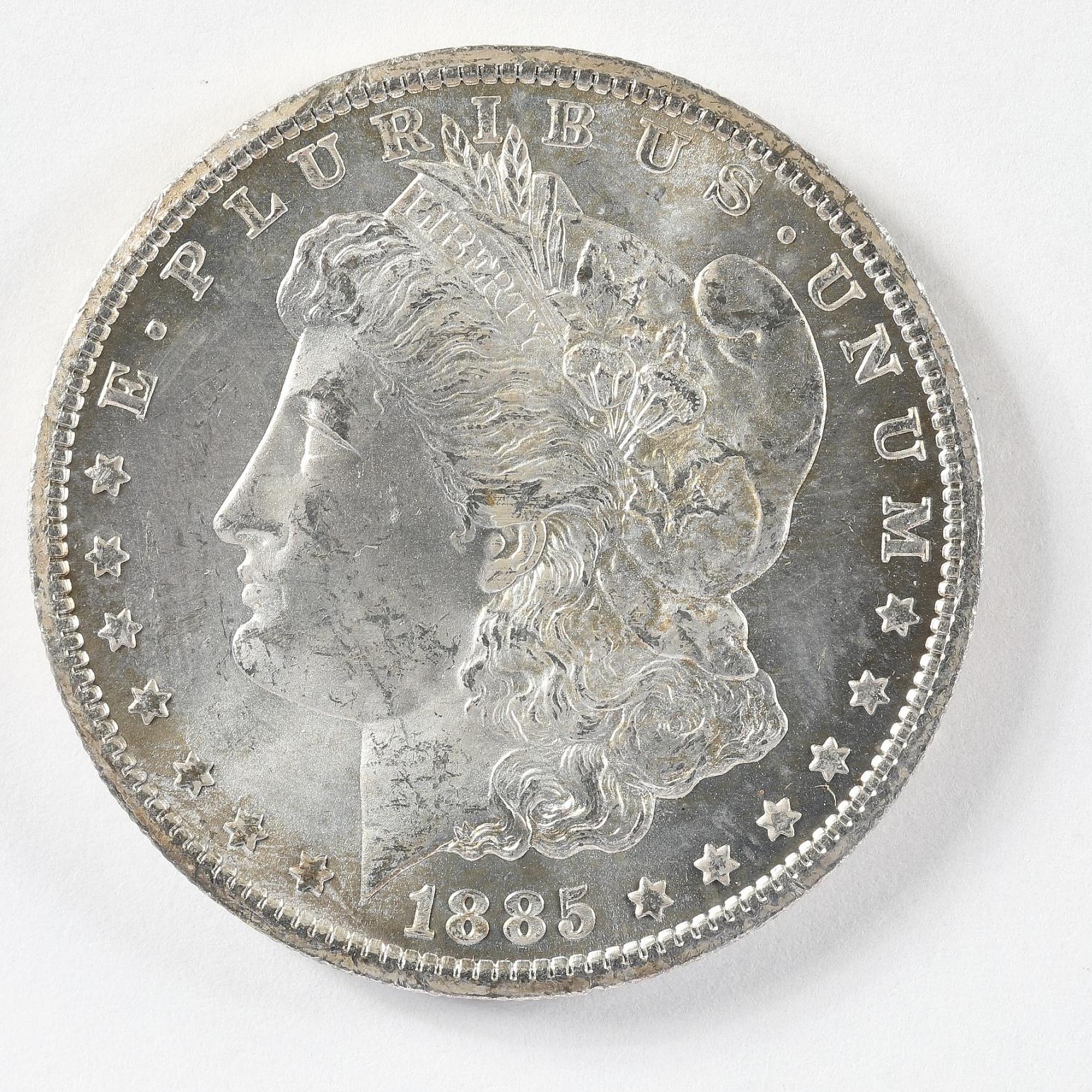
1878-CC dollar. National Numismatic Collection, National Museum of American History (public domain).
- Designer
- George T. Morgan
- Composition
- 90% silver, 10% copper
- Weight
- 26.73 g
- Silver content
- 0.77344 ozt
- Diameter
- 38.1 mm
- Edge
- Reeded
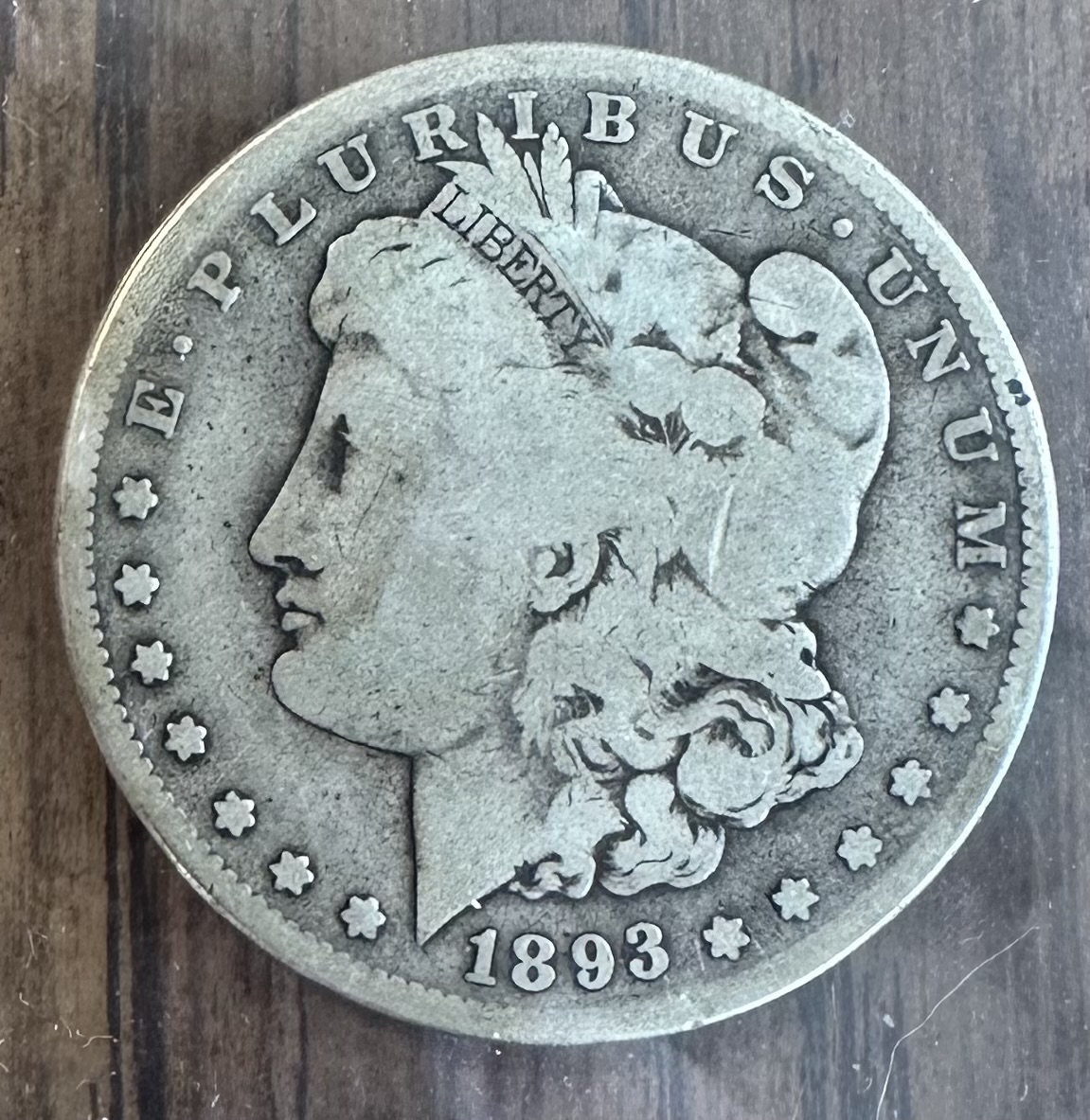
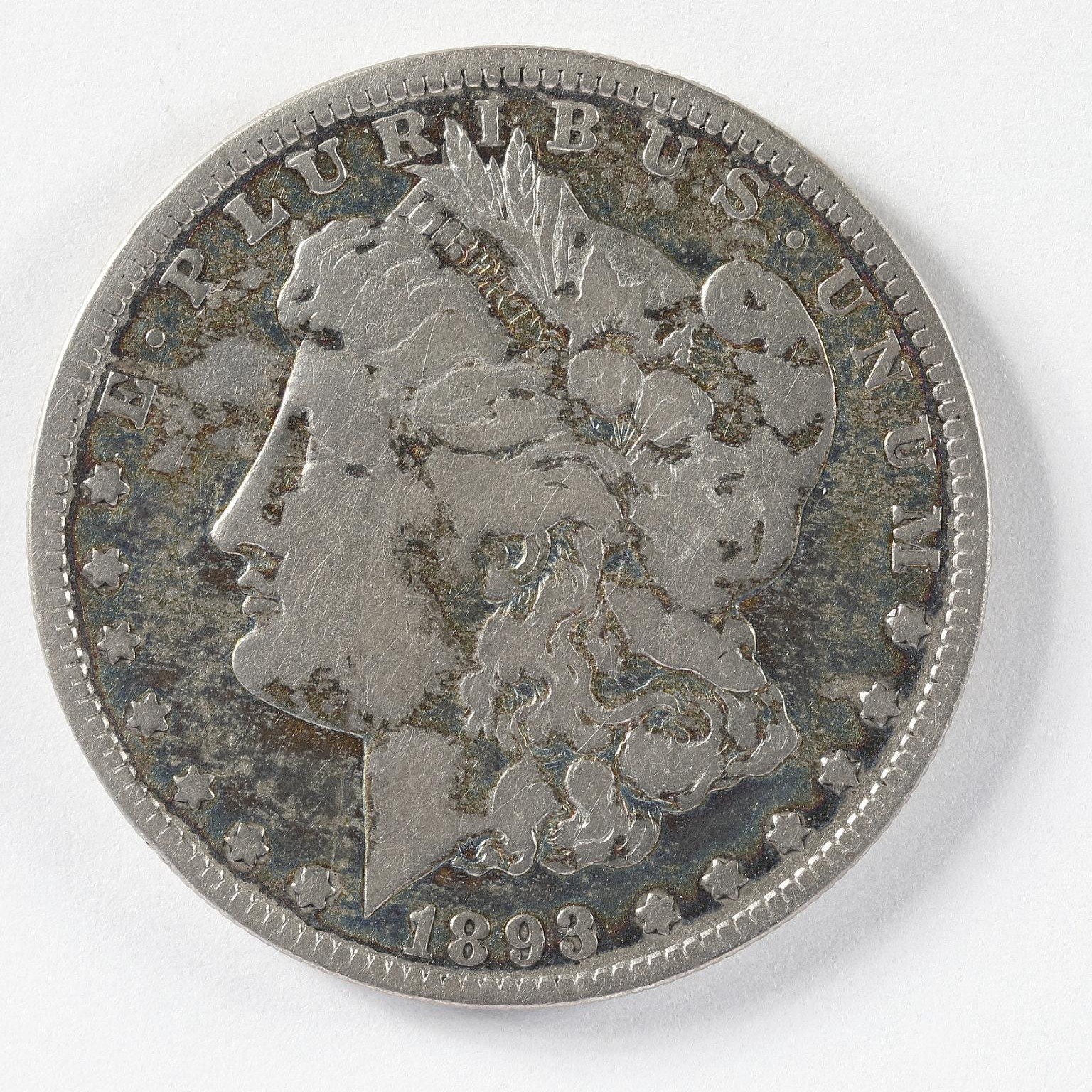
Every Morgan contains 0.77344 oz of silver — the floor under the whole series. Numismatic value is a different animal: an 1893-S holds the same silver as an 1885-O and is worth thousands of times more.Full melt page →
Why Morgan dollars matter
No other classic American series stacks this much on one design. An icon you can own for melt-plus. The Old-West romance of Carson City. Mintages in the tens of millions that produced both everyday coins and five-figure rarities — because Treasury vaults, the Pittman melt and the hoard releases scrambled every normal rule of survival. A proof-only mystery date. Mirror- fielded DMPLs. Hundreds of die varieties for the VAM specialists. And a complete date-and-mint set hard enough that finishing one is a life event. Beginners start with one gleaming dollar; specialists never run out of road.
- Issues
- 97
- Mints
- 5
- Struck (published)
- ≈657M
- Melted 1918
- 270.2M
- Carson City issues
- 13
- Silver per coin
- 0.77344 oz
- Business-strike keys
- 1893-S · 1889-CC
- The mystery
- 1895 — proofs only
Totals DERIVED from published US Mint figures (S2, S3).
Design
Anatomy of a Morgan dollar

Obverse
- Liberty — Anna Williams' profile, facing left. The cheek and the hair above the ear are the coin's highest points.
- Phrygian cap — the classical badge of freedom, soft behind the LIBERTY headband.
- Crown of wheat & cotton — Northern grain, Southern fiber: a deliberate post-Reconstruction union gesture.
- 13 stars & E PLURIBUS UNUM — ringing the portrait above the date.
- Date — with the mint mark opposite, one of the two facts that set an issue's identity.
- The initial M — at the truncation of the neck. Morgan signed both sides — a first on a US coin.

Reverse
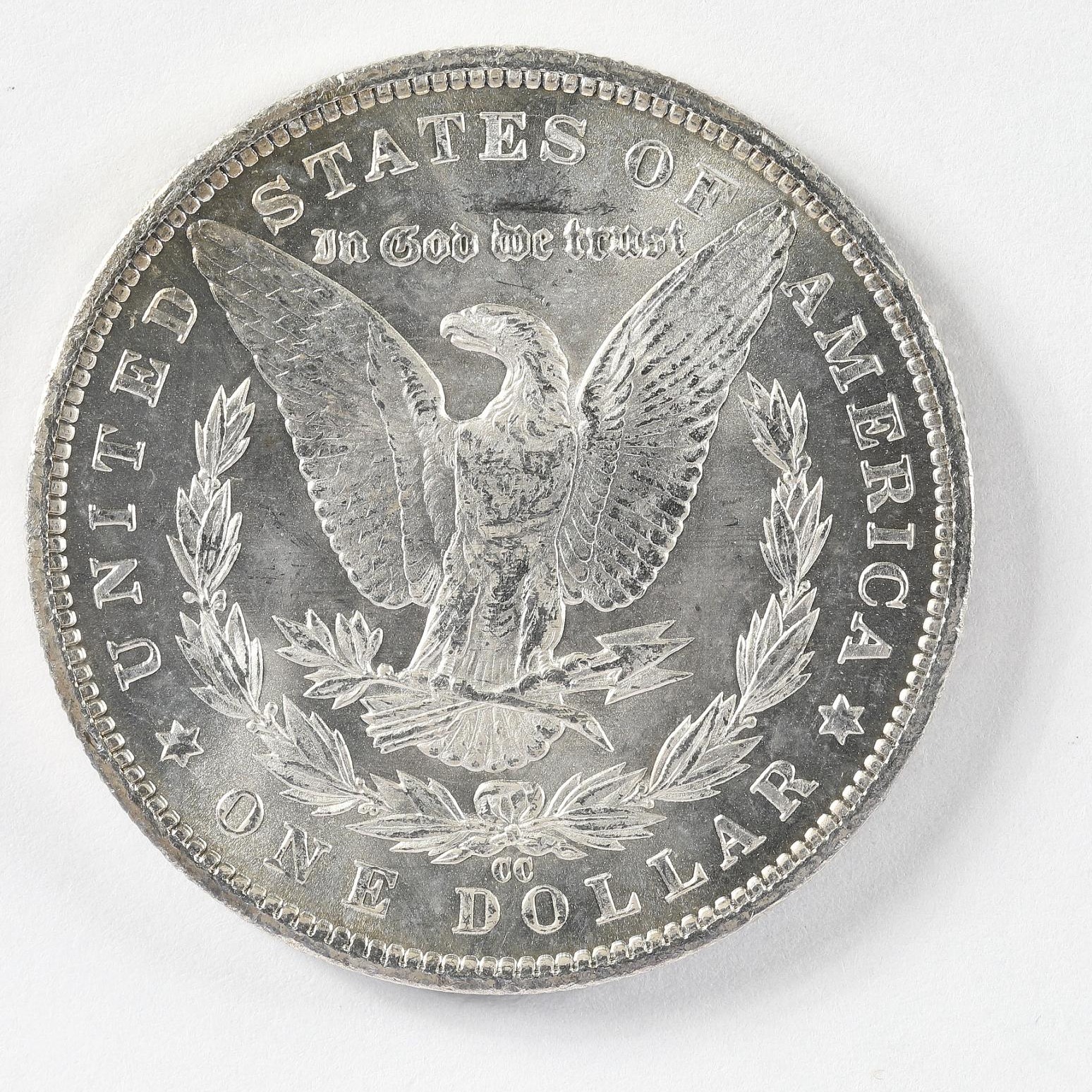
- Bald eagle — wings spread; the breast feathers wear first and strike weakest — the grader's puzzle.
- Arrows & olive branch — war and peace in the talons; seven tail feathers after March 1878.
- IN GOD WE TRUST — in Gothic script; UNITED STATES OF AMERICA and ONE DOLLAR ring the rim.
- Laurel wreath — encircling the eagle, tied in a bow at the base.
- The second M — on the left loop of that ribbon bow.
- Mint mark — below the bow, above the DO of DOLLAR: the most valuable millimeter on the coin.

Did you know?
The dollar you know wasn't the limit of Morgan's ambition — his unadopted 1879 Schoolgirl pattern is widely considered one of the most beautiful designs in American coinage. His portrait, Anna Williams', and the full design story live in the history reference.
Mints
Five mints, five fates

—Philadelphia1878–1904, 1921The mother mint: no mint mark, the largest total output, and all of the series' proof coinage. Notable: 1878 8TF · 1893 · 1894 · 1895 (proof) · 1921
CCCarson City1878–1885, 1889–1893The romance of the series — a frontier mint a few streets from the Comstock Lode. Notable: 1878-CC · 1885-CC · 1889-CC · 1893-CC
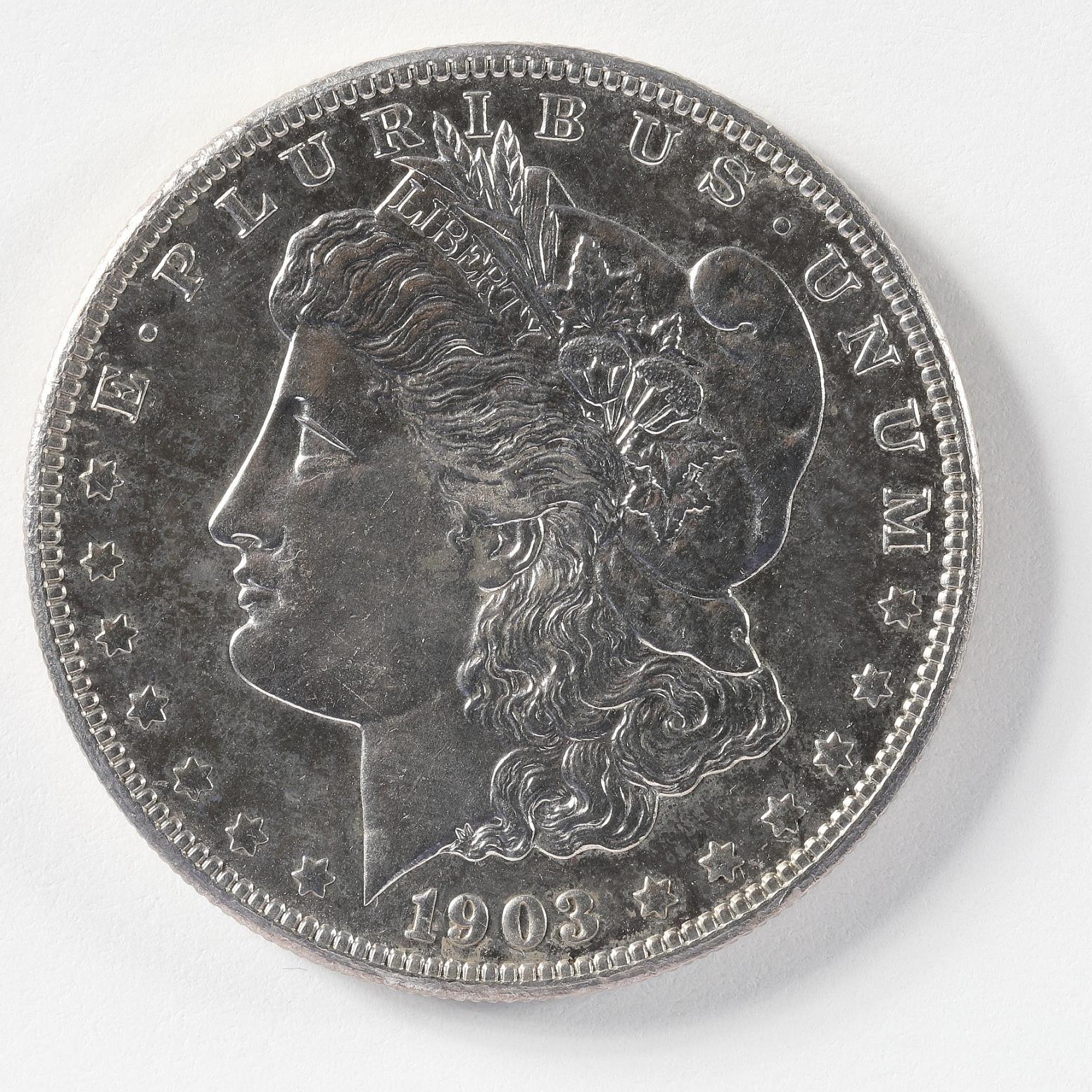
ONew Orleans1879–1904High volume with a reputation for soft, shallow strikes — a tendency, not a rule, but strong enough that sharply struck O-mint coins earn real premiums. Notable: 1883-O · 1895-O · 1903-O · 1904-O
SSan Francisco1878–1904, 1921The quality mint by reputation — typically full strikes and strong luster, with 1881-S the standard-bearer. Notable: 1878-S · 1881-S · 1892-S · 1893-S
DDenver1921 onlyOne year, one issue: 20.3 million 1921-D dollars — the only Denver Morgan, and the only chance to put a D in a Morgan set.. Notable: 1921-D
Key dates
The Morgan keys
1893-S100,000 minted
Lowest business-strike mintage of the series, released into hard Western use and never rescued by a hoard — the king of Morgan keys in every grade. PCGS estimates roughly 10,000 survivors across all grades and only ~123 in mint state.
Issue page →
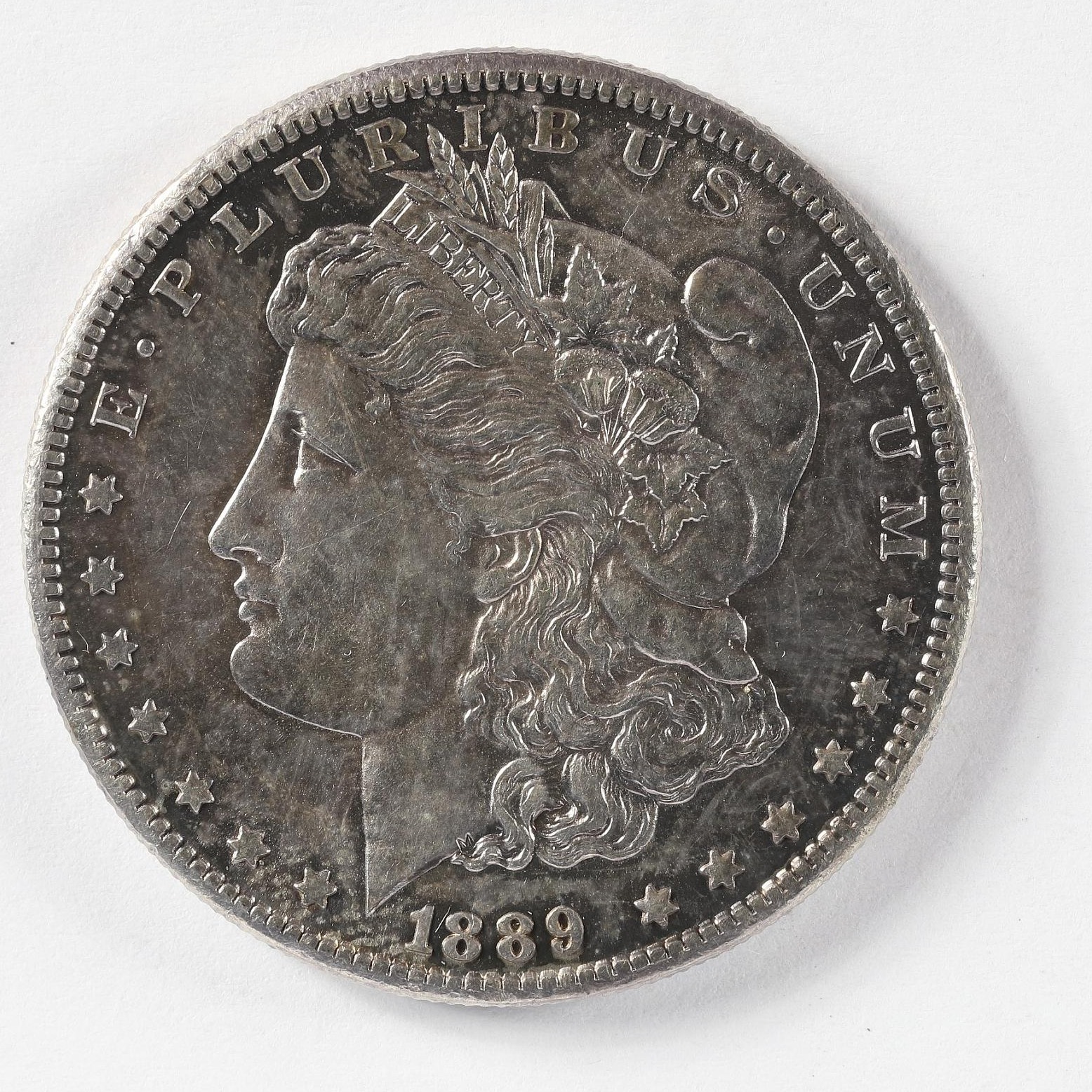
1889-CC350,000 minted
The rarest Carson City dollar. Struck the year the mint reopened, it circulated in Nevada instead of sleeping in a vault — and was nearly absent from the GSA hoard.
Issue page →
1895880 proofs minted
The 'King of the Morgans.' No authenticated 1895 business strike is known today. Mint ledgers record 12,000; whether they were struck as dated 1895 coins, struck and later melted, or never actually coined remains an open question. The collectible reality is settled either way: a date set runs through one of ~880 proofs.
Issue page →
1893-CC677,000 minted
The last Carson City dollar. Most survivors are heavily bag-marked, making clean mint-state examples conditionally rare.
Issue page →
1894110,000
1893-O300,000
1885-CC228,000
1892-S1,200,000
1903-O4,450,000
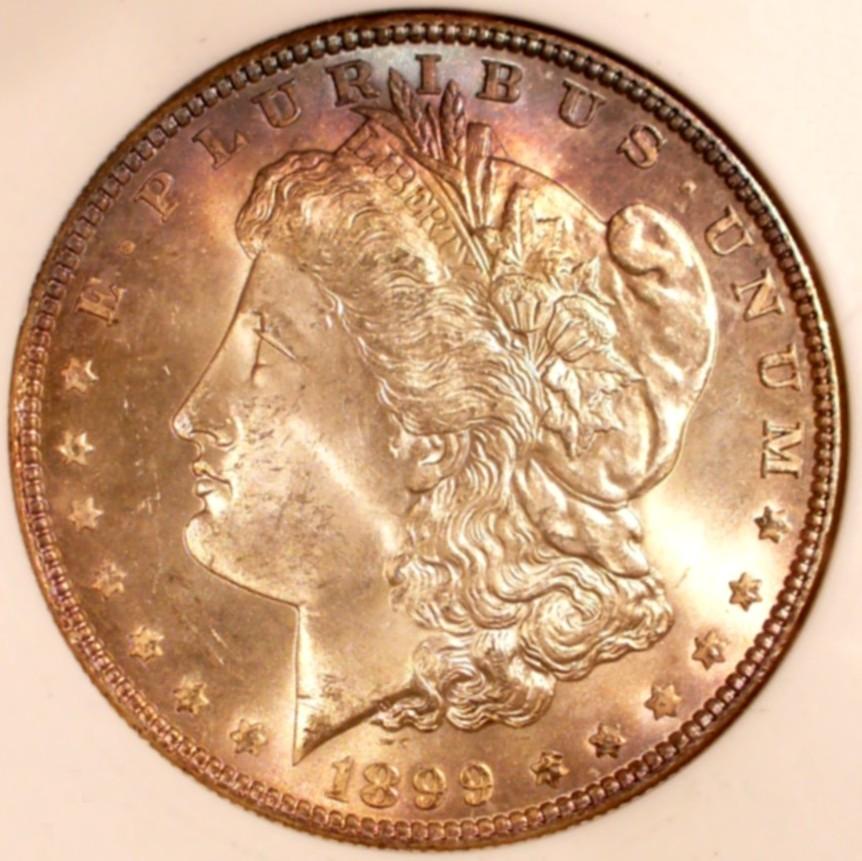
1899330,000
Collecting
Nine ways to collect Morgans
One type coinLOW
One superb Morgan — classically an 1881-S.
Date setMODERATE
28 coins; 1893, 1894 and the 1895 question.
Date + mint setHIGH
All 97 — years of work; three famous final holes.
Carson City setMOD–HIGH
13 issues of frontier romance; 1889-CC is the wall.
GSA holder setSPECIALIST
The hoard event itself, black holders and papers.
1878 varietiesSPECIALIST
8TF, 7/8TF, 7TF — year one is a whole collection.
VAM varietiesADVANCED
Die-level collecting; hundreds of attributed varieties.
PL / DMPLADVANCED
Mirror fields, cameo contrast, unforgiving grading.
Toned MorgansTASTE
Bag-end rainbows — beauty with an authentication tax.
Your collection
The 97-issue checklist
Every date-and-mint issue with published mintages, rarity classes and live melt — tick what you own and watch set progress, Carson City completion, keys owned and your collection's silver weight. Saved privately in your browser; no account, nothing transmitted.
0 / 97
Issues owned on this device
Start ticking — it remembers.
History
The story in five acts
1878 — politics strikes a coin. The Bland–Allison Act, passed over a presidential veto, ordered the Treasury to buy Western silver monthly and coin it into dollars: the Morgan was, above all, a product of silver-purchase legislation rather than commercial demand. 1876–78 — the design. English engraver George T. Morgan modeled Liberty on Philadelphia teacher Anna Willess Williams, signed both sides with his initial — a first — and watched the Mint re-hub his eight-tail-feather eagle to seven within weeks. 1878–1904 — struck into the vault. Five mints produced faster than commerce wanted; millions of dollars aged in thousand-coin canvas bags. 1918–21 — melted and reborn. The Pittman Act melted 270,232,722 of them, arbitrarily — after which mintage alone stopped being enough to predict rarity — then required the 1921 revival that preceded the Peace dollar. 1962–80 — the vaults open. Treasury bags emptied at face value, "rarities" collapsed, and the GSA's sales of 2.8 million Carson City dollars built modern Morgan collecting.
1885-CC
228,000 minted
GSA bags survived — easier uncirculated than worn.
1892-S
1,200,000 minted
Nearly all circulated — five figures in mint state.
1903-O
4,450,000 minted
'Great rarity' until the bags of 1962.
Grading
Grading, in brief
Wear shows first on the hair above Liberty's earand the eagle's breast; bag marks — especially on the cheek — separate ordinary mint state from gem; real luster cartwheels under a tilted light; and the hardest Morgan skill is telling weak strike from wear. Mirror- fielded PL and DMPL coins, and the small Philadelphia proof runs, play by their own rules. For key dates and anything expensive: PCGS/NGC certification, verified. And never, ever clean a coin.
Market
Melt, money, and what's coming
Melt value — live
$53.40
0.77344 oz of silver at live spot — the floor under every Morgan. Common circulated dates trade near this plus a premium; everything above is numismatics: grade premium, rarity premium, conditional rarity, PL/DMPL, toning, certification. Value a pile with the junk silver calculator.
The Morgan Market — in build
Coming when authorized realized-sale data exists — and not before: Market by Grade, the Grade-Value Curve, Recent Realized Sales, raw-vs-certified views, and Guide vs Realized comparisons. The data model is built with publish gates on sample size; asking prices never count as market.Methodology →
Explore Morgan dollars
Complete History
From the Crime of '73 to the GSA sales — the full arc, sourced.
The Five Mints
Philadelphia to Carson City: what the little letter really means.
Key Dates & Rarities
Every key with survival context, grade sensitivity and fraud risk.
Collecting Guide
Nine pathways, buying safely, storage, and set tactics.
Grading Guide
The circulated ladder, the Mint State game, PL/DMPL and proofs.
97-Issue Checklist
Track your set — progress, keys, CC and silver weight, saved privately.
Deep issue pages:1878 8TF1881-S1885-CC1889-CC1892-S1893-CC1893-S18951903-O1921— more as the research earns them. Melt reference: Morgan & Peace dollar melt.
Sources
- S1 ·OBSERVEDUnited States Mint specifications (composition, weight, diameter, edge)
- S2 ·OBSERVEDMintages: United States Mint records as compiled in standard references (Yeoman, A Guide Book of United States Coins tradition); cross-checked against PCGS CoinFacts (retrieved 2026-08-22)
- S3 ·OBSERVEDPittman Act, ch. 63, 40 Stat. 535 (Apr. 1918): up to 350,000,000 dollars authorized; 270,232,722 melted (11,111,168 of them recoined as subsidiary coinage) per Treasury records — see Newman Numismatic Portal, 'Silver Dollars Struck Under the Pittman Act' (retrieved 2026-08-22)
- S4 ·OBSERVEDTreasury releases (1962–64) and GSA Carson City sales (2.8M+ dollars; seven sales 1972–1980; ~$107M): Q. David Bowers, Silver Dollars & Trade Dollars of the United States — A Complete Encyclopedia, ch. 14 (PCGS edition)
- S5 ·OBSERVEDRedfield Hoard (~407,000 coins; A-Mark, $7.3M, 1976): Bowers encyclopedia ch. 14; CoinWeek hoard histories
- S6 ·OBSERVEDContinental-Illinois Bank hoard (~1.5M dollars, early 1980s): Bowers encyclopedia, ch. 14
- S7 ·OBSERVEDDesign history (Morgan's 1876 arrival; Williams sittings; M initials at neck truncation and ribbon loop; 8TF→7TF re-hubbing; 1910 die destruction): standard numismatic histories (CoinSite; Coin Community), corroborated by Smithsonian NNC object records
- S8 ·ESTIMATED1893-S survival estimates (~9,948 all grades; ~123 mint state; ~18 MS65+; Bowers range 6,000–12,000): PCGS CoinFacts, 1893-S entry (retrieved 2026-08-22)
- S9 ·DERIVEDRarity classifications: OunceDesk editorial methodology (defined on this page), in the Red Book/Bowers tradition
- S10 ·OBSERVEDPL/DMPL reflectivity conventions: grading-service published standards (PCGS/NGC)
- S11 ·ESTIMATED1892-S survival (MS ~135–270: MS60-62 75–150, MS63 25–50, MS64 10–20, MS65+ 25–50; bimodal grade distribution): PCGS CoinFacts, 1892-S entry (retrieved 2026-08-22)
- S12 ·ESTIMATED1903-O: pre-release status (<10 MS believed known; $1,500 in the 1962 Guide Book — highest of any Morgan), release of ~200,000–350,000 coins autumn 1962, price fall to ~$7 in 1963; modern MS survival ~200,000+: PCGS CoinFacts 1903-O; Coin World, 'Red Book 70th anniversary: the 1903-O'; CoinAppraiser price history (retrieved 2026-08-22)
- S13 ·ESTIMATED1885-CC: GSA disbursement of 148,285 coins (Oct 1973–1980); survival ~155,000–168,000 nearly all mint state; ~2,000–4,000 circulated survivors ('the king of worn Morgans'): PCGS CoinFacts 1885-CC; CoinWeek collector's guide (retrieved 2026-08-22)