Why this issue matters
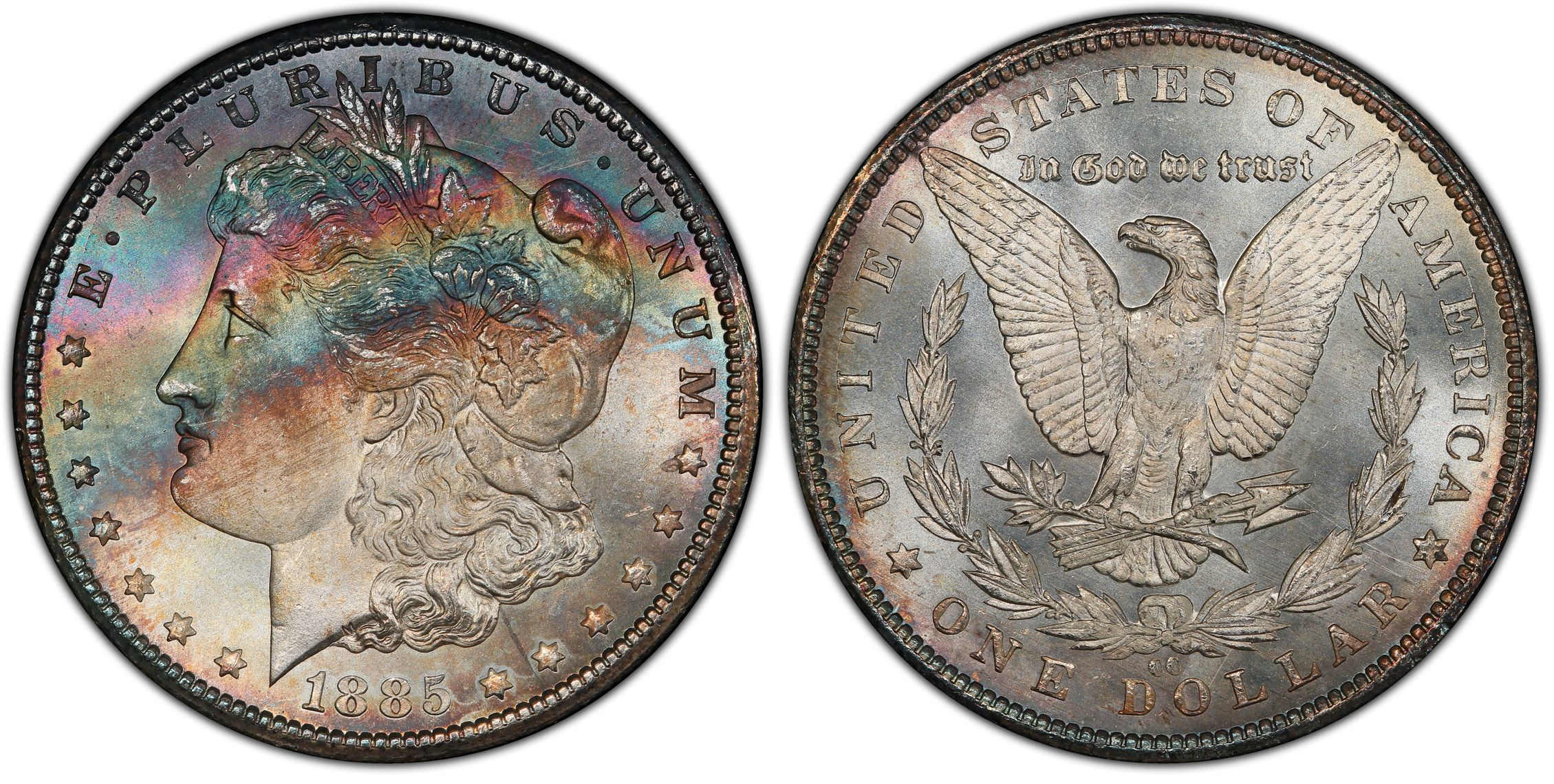
The coin that proves survival, not mintage, sets rarity — from the inverted side. 228,000 struck, the second-lowest mintage of the series; yet the GSA sold 148,285 of them out of government vaults in the 1970s, and an estimated 155,000–168,000 survive today, nearly all uncirculated. Sixty-five percent of an entire mintage, preserved by accident, released by mail-order.
Rarity & survival
Two coins share this date. The uncirculated 1885-CC is a low-mintage issue made accessible: gems through MS66 are available for a price (MS67+ gets genuinely tough), most in or from GSA holders. The circulated 1885-CC is the opposite — PCGS-cited estimates put worn survivors at only ~2,000–4,000, mostly Good to Fine, making this in circulated grades the king of Morgans, outranking even the 1893-S. Almost nobody spent them in Nevada; almost everything went to the vault.
Collector values
We don't publish a price table for this issue yet — numismatic values require sourced market observations with provenance, and we won't invent them. The realized-market architecture (per-grade medians, ranges and trends from authorized sale data) is built and waiting on data; see methodology. Until then: the melt value above is the floor, and the rarity discussion tells you which side of "far above melt" this issue lives on.
Grading this issue
For mint-state examples the usual CC drill applies: bag marks against unbroken luster, cheek quality setting the grade, GSA holders adding hoard provenance (many collectors pay premiums to keep coins in them — NGC grades coins in the holders). The connoisseur's oddity is the honest VG 1885-CC: a coin most collectors have never seen, and a sleeper for specialists who understand what the survival numbers say.
Authentication
Meaningful risk on two fronts: added-CC alterations built from Philadelphia 1885 coins (a big price gap invites them — magnify the mark), and counterfeit or tampered GSA holders around genuine and non-genuine coins alike. Certified examples, or GSA holders with papers cross-checked, are the sane path.
History
1885 was Carson City's last year before the suspension — coinage stopped that year and didn't resume until 1889. The mint's remoteness did the preserving: output shipped to Treasury storage instead of Western tills, waited out the Pittman era, and surfaced in the 1962–64 releases and the GSA's 1973–1980 mail-bid sales as the definitive vault-survival story.

