Early Dollars 1794–1803
The first silver dollar struck by the United States — every die cut by hand, so no two are quite alike. The Mint never recorded how many coins of a given DATE it struck, only how many the Chief Coiner delivered in a calendar year, and those are not the same number.
Dollars or units — each to be of the value of a Spanish milled dollar as the same is now current, and to contain three hundred and seventy-one grains and four sixteenth parts of a grain of pure, or four hundred and sixteen grains of standard silver.
Act of April 2, 1792 §9
specimen graded PR58 · source files unmodified
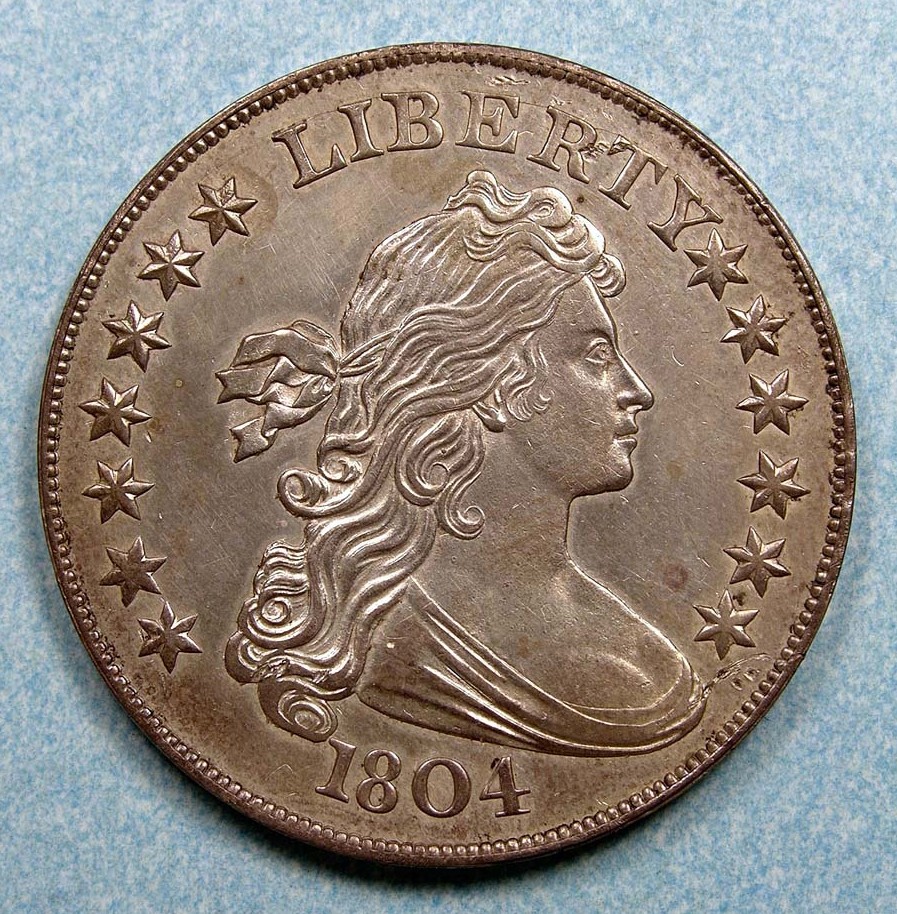
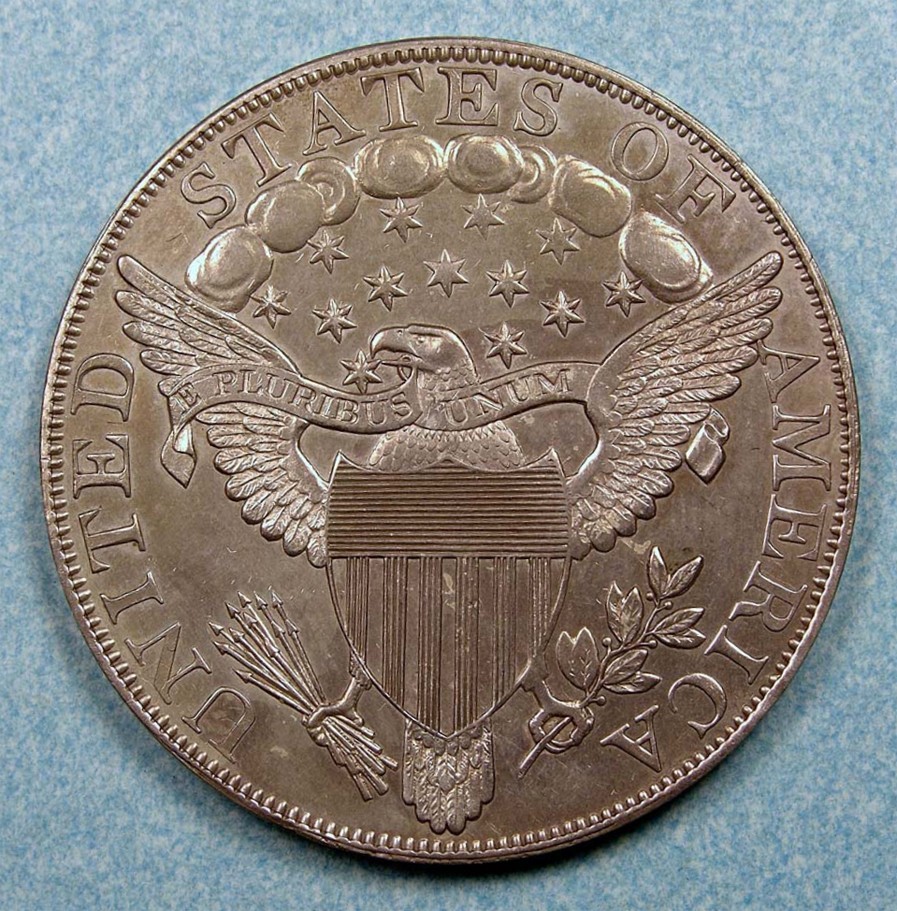
Six benchmark issues
Fifteen issues from one mint across ten years. These six decide what an early-dollar set costs — and three of them are the 1804, which was not struck in 1804.
1804 Class I
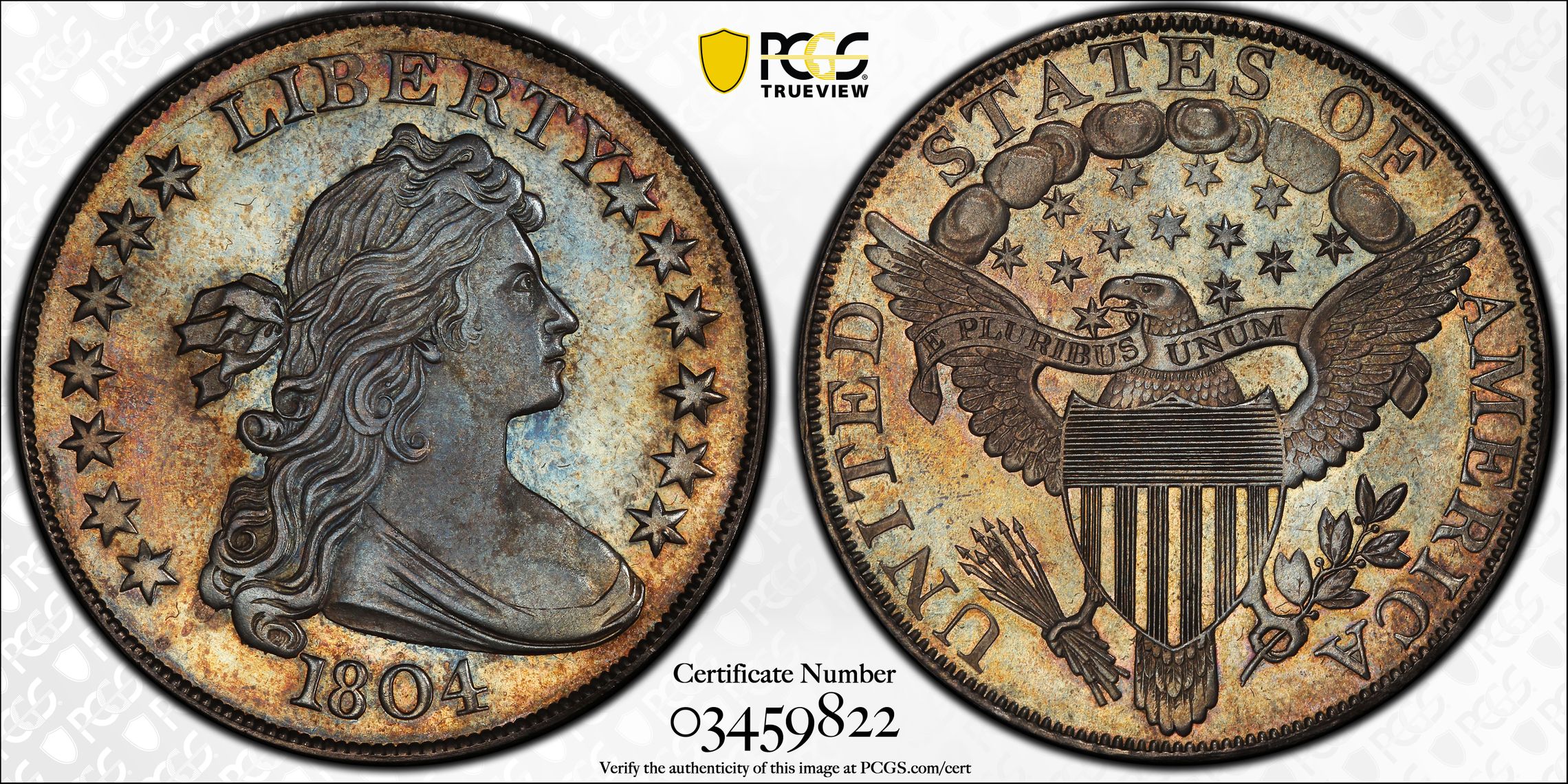
Struck c. 1834–35 for diplomatic presentation sets, not in 1804. PCGS's survival estimate is 8 and its mintage field also reads 8 — for this issue the two are the same number. It is the only coin in the series whose EXISTENCE is the subject, and the reason the series has a literature at all. Auction record $7,680,000 for the PR68 Watters–Childs coin, August 2021.
1804 Class III
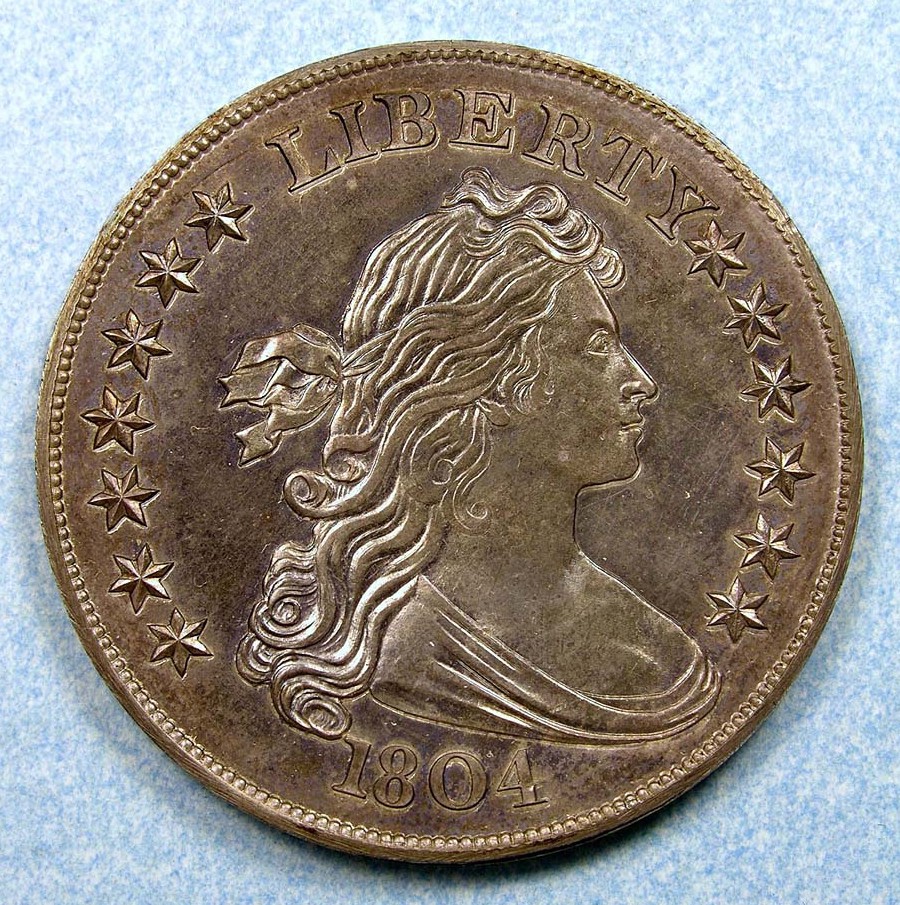
Struck c. 1858–60 at the Mint, without authority, from a recut obverse and a substitute reverse, then edge-lettered afterwards with partial collar segments — which is why the lettering repeats and drops letters. The count changed in living memory: the standing figure was six until the James A. Stack coin, unpublished until 2025, sold for $6,000,000 in December 2025.
1804 Class II
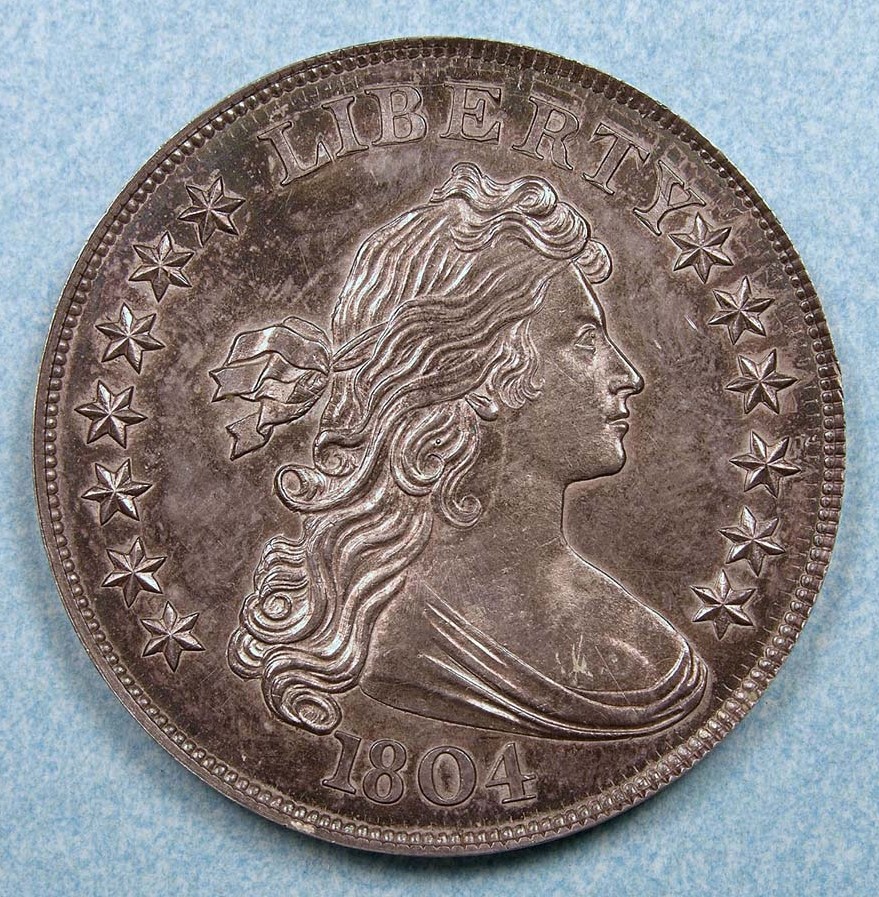
The unique plain-edge piece retained by the Mint in 1858 and now in the National Numismatic Collection. The Mint's own Assistant Curator described it in 1887 as "only a re-strike… much lighter in weight, and intended merely to exhibit the reverse side of the coin" — 381.5 grains against 415–416 for a standard dollar. It has no market and never will.
1794
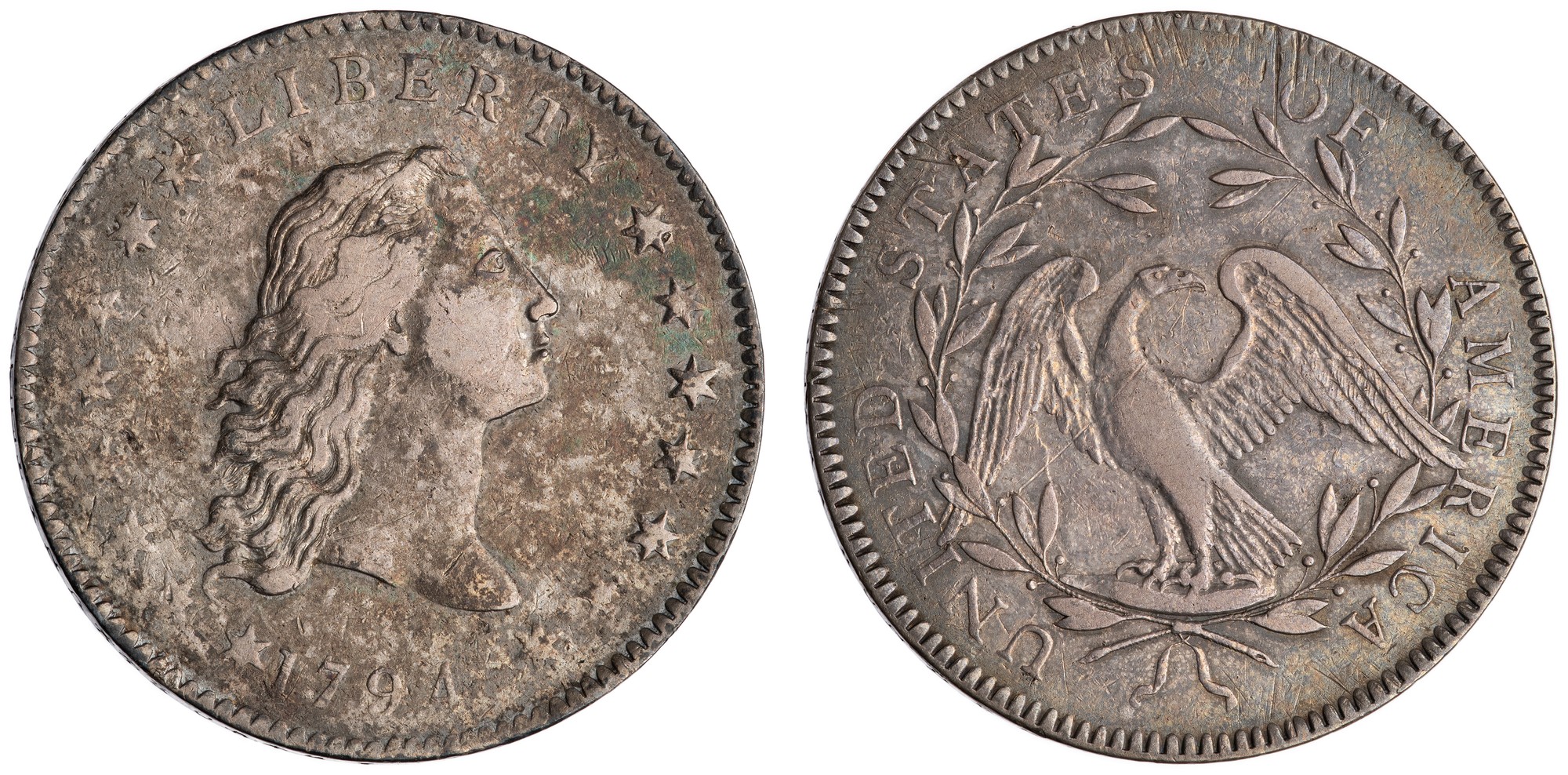
The first United States silver dollar, delivered October 15, 1794. One die marriage — BB-1 / B-1 — so there is no 1794 variety set to complete, which makes it a type collector's coin and a pure condition play. PCGS estimates 150 survivors across all grades, 10 in mint state, 4 at MS65 or better. Auction records $10,016,875 (silver-plug SP66, January 2013 — the first coin of any nation to cross eight figures), $6,600,000 (the Lord St. Oswald MS66+, August 2021) and $4,500,000 (MS63+, November 2025).
1797
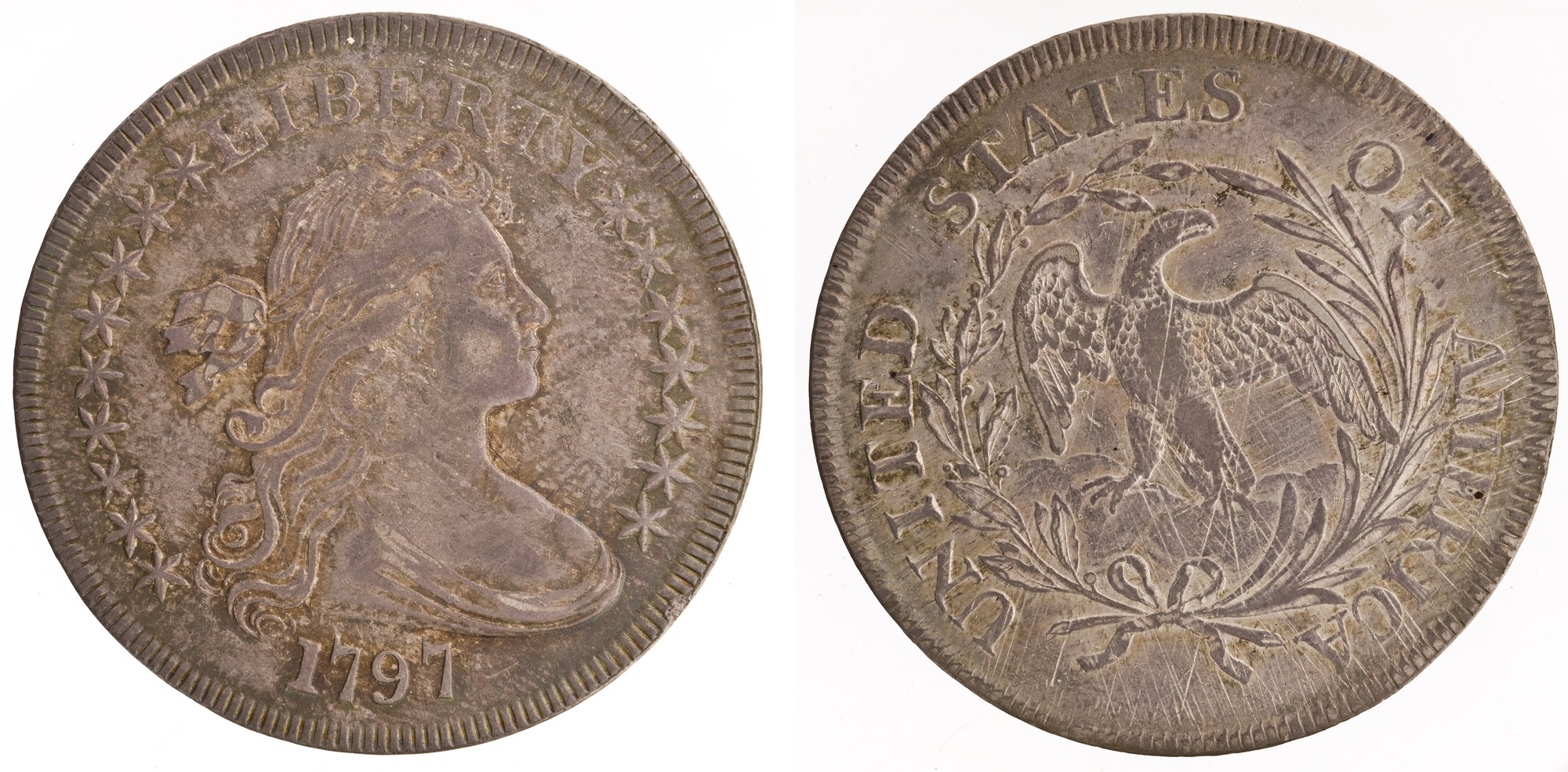
The lowest delivery figure of any regular-issue year in the series, and lower than most collectors expect. It is also the series' loudest arithmetic anomaly: a delivery of 7,776 against PCGS survival estimates totalling roughly 3,000 across the varieties implies a survival rate near 40%, against 2–3% for 1798–1803. Either 1797 dollars were saved at an extraordinary rate, or 7,776 is not the number of coins dated 1797 — and the second explanation is the likelier one.
1803
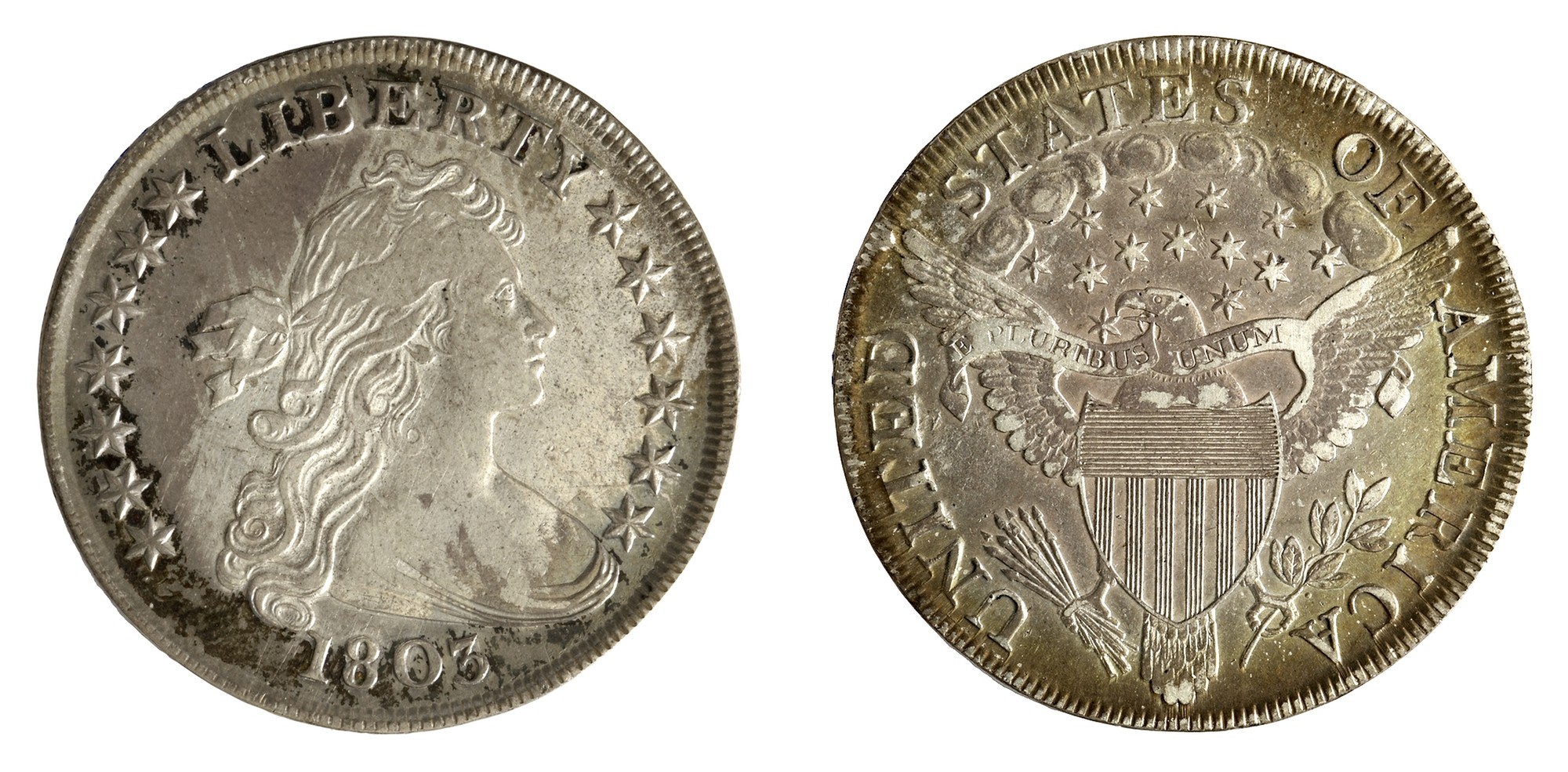
An obtainable date carrying the series' most interesting piece of arithmetic. The Mint recorded 66,064; the reference literature carries 85,634; the difference is 19,570, exactly the 1804 delivery. The 1804 coinage was quietly reassigned to the 1803 date at some point in the twentieth century, and the fossil is still sitting in every price guide.
The survivors column is empty because this series carries no STRUCTURED census — not because none exists. Three of these six cards quote a published PCGS survival estimate in their own text, and those sentences are the sourced record as it stands. Until the estimates are carried as figures with their own attribution and date, they stay in the prose that cites them rather than being retyped into a column that would then look like ours. The mintage beside it is OBSERVED, read from the Mint's delivery registry, which counts deliveries rather than dates. Market strips read the eBay Browse API live and are affiliate-tracked; asking prices, not realised sales, and nothing in them reorders this grid. Coins marked “photography pending” await rights-cleared imagery, per house rule.
The delivery registry
For this series, "mintage" is a trap. The United States Mint never recorded how many coins of a given DATE it struck. It recorded how many coins the Chief Coiner DELIVERED to the Treasurer within a calendar year — and those are not the same number, because dies were used until they broke, not until the year changed.
Dollars delivered by the Chief Coiner to the Treasurer
What each basis means
Hard Money. Hard Numbers. · Not investment advice. Some links pay us a commission — disclosures. Affiliate economics never determine research conclusions or rankings. © 2026 OunceDesk. Every figure classed OBSERVED / DERIVED / ESTIMATED / SPECULATIVE.