Philadelphia — the mother mint
No mark, the biggest totals, and the widest range in the series: the 21.7-million-coin 1889 at one end, the 110,000-coin 1894 and the proof-only 1895 at the other. Philadelphia also struck every Morgan proof — the small annual collector runs that give the series its separate proof market. Philadelphia dollars sat in vaults in enormous quantity, which is why so many 1880s P-mints are cheap in mint state; the exceptions (1892–1895, 1899, 1901 in true MS) are where the collecting interest concentrates.
Carson City — the frontier mint
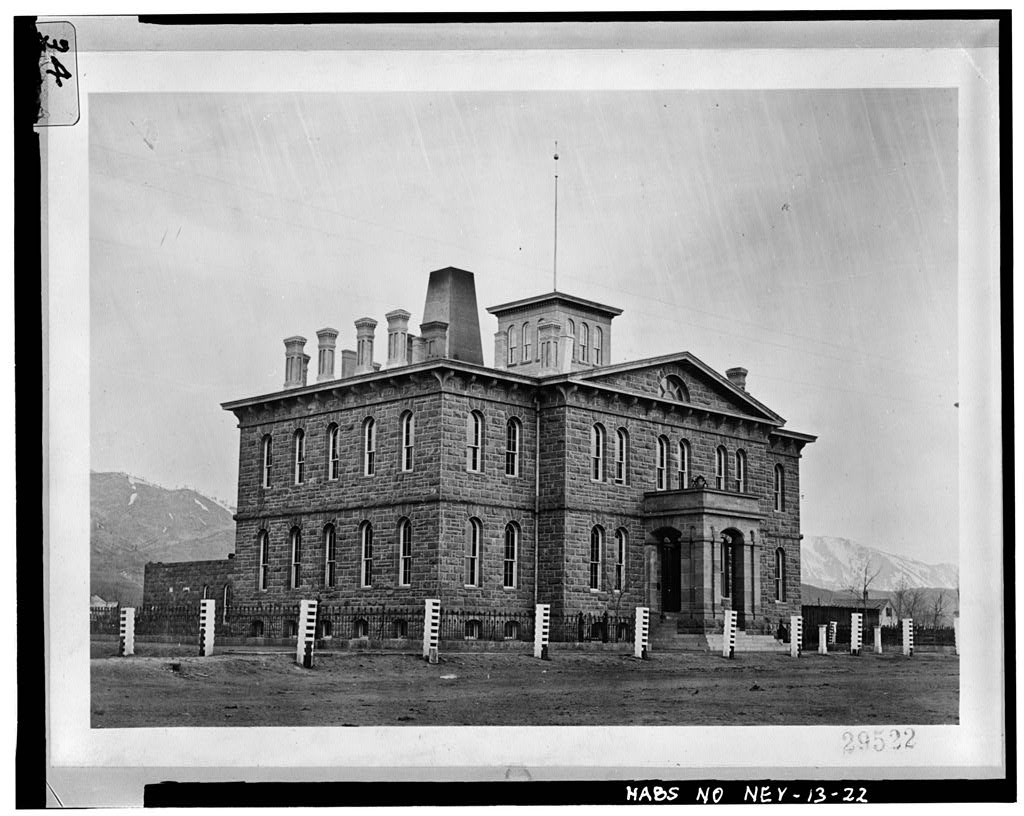
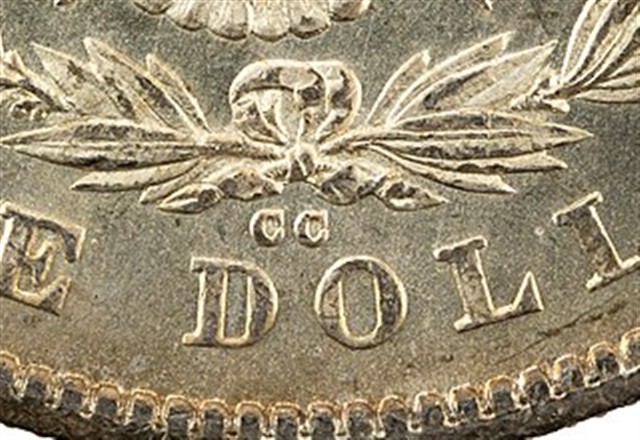
Carson City exists because hauling Comstock Lode silver over the Sierra to San Francisco was expensive and occasionally larcenous; a mint a few streets from the ore fixed that. It struck Morgans in two stints — 1878–1885, then a suspension (politics and declining Comstock output both played parts), then 1889–1893 until the Panic year closed it for good. Thirteen CC dollar issues resulted, every one collected: mintages were small (228,000 for 1885-CC; nothing above 2.31M), and the mint's remoteness meant much of its output went straight to storage. That storage became the punchline: the Treasury discovered 2.8+ million CC dollars in its vaults, and the GSA's 1972–1980 sales distributed them — mostly uncirculated, mostly in black holders — to the public. The result is the strangest survival profile in American coinage: several CC dates are easier to buy uncirculated than worn, while the one that missed the vaults, the 1889-CC, is the scarcest Carson City dollar. Add Old-West romance and the CC premium outruns arithmetic — which is exactly why we class CC issues as their own thing.
New Orleans — volume with a soft touch
The reopened Southern mint ran huge Morgan volumes from 1879 to 1904 — eight O-mint issues top ten million — with a strike reputation to match its workload: dies were spaced for die life, and many O-mint dollars show soft centers, flat breast feathers and mushy hair above the ear. That's a tendency, not a law, but it's strong enough that sharply struck New Orleans coins carry real premiums, and grading O-mints means learning to separate weak strike from wear (our grading guide covers the tell). Vault storage cut both ways here: the 1883-O and 1884-O emerged by the bag and are among the cheapest mint-state Morgans, while the 1895-O — low mintage, no bags found — is a conditional nightmare, and the 1903-O delivered the Treasury release's most famous price collapse.
San Francisco — the quality mint
San Francisco's Morgans carry the opposite reputation: strong strikes, deep luster, the best-made coins of the series — 1881-S is the gem type coin of American silver collecting for a reason. The S-mint story turns dark only where circulation ate the output: the 1892-S (common worn, a major rarity in mint state) and the 1893-S, the king itself, whose 100,000 coins went into Western commerce and never came back clean.
Denver — one year, one coin
Denver's mint opened in 1906 — after the Morgan era — so when the Pittman recoinage brought the design back in 1921, Denver struck its first and only Morgans: 20.3 million 1921-D dollars, the sole D in the series. A complete "one from each mint" set is therefore five coins, and the D slot has exactly one candidate — a quirk collectors enjoy more than the coin's commonness suggests.
Reading tendencies responsibly
Mint characterizations are statistical, not personal: every mint produced hammered gems and mush, every mint's dies aged, and a specific coin always outranks its mint's reputation. Use the tendencies to set expectations and spot outliers — a needle-sharp New Orleans dollar is worth a second look precisely because the stereotype says it shouldn't exist.