Skip to content
OUNCEDESK
SILVER$69.11GOLD$4,604GOLD/SILVER66.6PLATINUM$1,887PALLADIUM$1,371COPPER$6.47BTC$77,243

Coins /Morgan Dollars / 1903-O

1903-O Morgan Dollar

New Orleans Mint · Semi-key

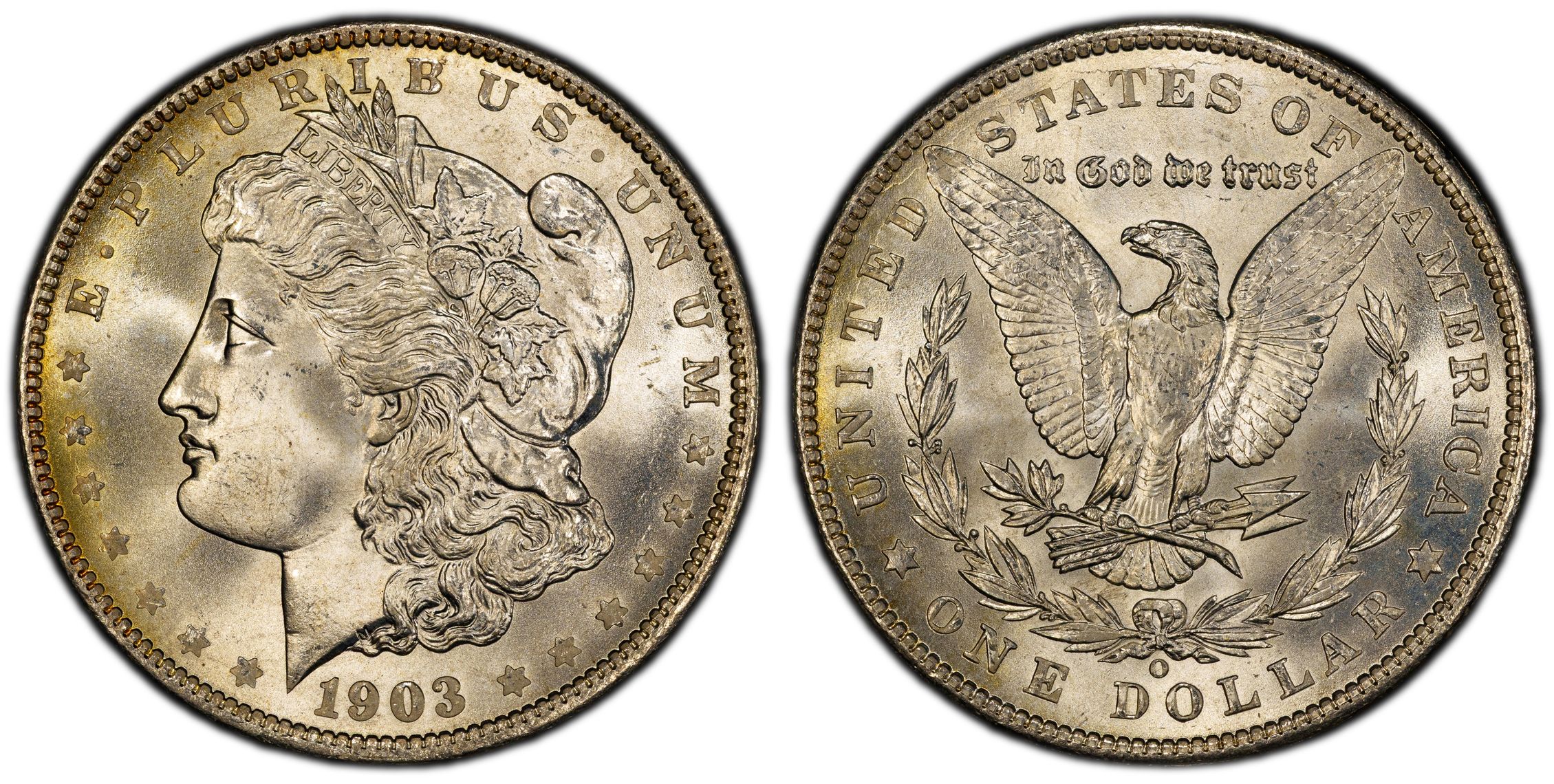
Morgan dollar obverse (series reference coin)Morgan dollar reverse (series reference coin)

Series reference coin (1878-CC, National Numismatic Collection) — shown for design reference, not an example of this issue.

Melt value$53.40

SNAPSHOT ·0.77344 oz silver — the floor, not the price. This issue's collector value stands far above its metal.

Year
1903
Mint
New Orleans (O)
Mintage
4,450,000
Strike
Business strike
Composition
90% silver, 10% copper
Weight
26.73 g
Silver
0.77344 ozt
Diameter
38.1 mm
Edge
Reeded
Designer
George T. Morgan

The 1962 Treasury-release lesson

Why this issue matters

The most famous price collapse in American numismatics — and the best story in the series. Until the autumn of 1962, the 1903-O was THE Morgan rarity in mint state: fewer than ten uncirculated pieces were believed to exist, and the Guide Book listed it at $1,500 — the highest price of any Morgan dollar. Then Treasury vault bags opened, an estimated 200,000–350,000 uncirculated 1903-O dollars poured out, and by 1963 the price had touched seven dollars. Rarity, it turned out, had been an accounting question all along.

Rarity & survival

Today the inversion is complete: PCGS-cited estimates put mint-state survivors around 200,000 or more (MS60–62: 120,000–240,000; MS63: 40,000–80,000; MS64: 20,000–40,000; MS65+: 10,000–20,000) — a thoroughly available coin in uncirculated grades. The quiet twist collectors miss: because nearly the entire surviving population came out of sealed bags, honestly worn examples are comparatively scarce — most 1903-O dollars never circulated at all.

Collector values

We don't publish a price table for this issue yet — numismatic values require sourced market observations with provenance, and we won't invent them. The realized-market architecture (per-grade medians, ranges and trends from authorized sale data) is built and waiting on data; see methodology. Until then: the melt value above is the floor, and the rarity discussion tells you which side of "far above melt" this issue lives on.

Grading this issue

A bag-population coin: expect mint frost, soft strikes on some examples, and value set almost entirely by marks and eye appeal within Mint State. Nothing exotic — which is the point. Grade it like the common coin it now is, and remember it once wasn't.

Authentication

Low fraud pressure since 1962 did what no counterfeiter could. The residual risks are ordinary: cleaned coins sold as original, and the occasional pre-1962 story attached to a coin to romance the price. The coin is common; documented pre-release provenance is the rare thing.

History

New Orleans struck 4.45 million in 1903, late in the program's twilight; the bags went to storage like so much else. What makes this issue historic is November 1962: an annual holiday-season silver-dollar payout cracked a sealed vault section, rare dates surfaced, word spread, and the run that emptied the Treasury's hundreds of millions of dollars began. The 1903-O was the poster child — the coin that taught the entire hobby that 'rarity' meant 'not yet released.'

1962 in context

The Treasury releases didn't just reprice one coin — they re-founded the hobby. Collectors who watched a $1,500 coin become a $7 coin learned to ask where every 'rarity' had been sleeping, grading services later rose partly to sort the released millions, and Morgan collecting's modern structure — survival-driven, grade-driven, hoard-aware — dates to that autumn.

Related issues:1885-CC1892-S1893-CC· Full series guide· Checklist

Sources: mintage and production history per the series source ledger (S1–S8); rarity characterizations are standard numismatic consensus (DERIVED).