CoinsEarly QuartersVarieties
Varieties & attribution
This is the only series on this site whose standard variety reference is public domain and in the OunceDesk Archive. Everything below is quoted from Browning himself rather than described at second hand — and the eight photographic plates that define his ninety varieties are on this page.
The two mechanisms
Hand-punched dies — and dies that outlived their dates
The first mechanism is the same as in every early-silver series: between 1796 and 1836 every element of a die that was not the central punch — the stars, the date digits, the letters, the berries, the arrowheads — was entered by hand, one punch at a time. No two dies were alike, and the Mint said so when it stopped: in 1836 the Director announced fully hubbed dies, "exact fac-similes of one another."
The second mechanism is this series' own, and it is the reason its rarities exist: dies outlived the years they were cut for. Because quarters were made in only twenty-five of forty-three years, obverse dies were prepared, shelved, and re-dated when a delivery finally came. Browning worked it out from the coins in 1925, in the 1822 entry, before describing any of the coins it explains:
"The coinage of this year appears to have been made with one obverse and two reverse dies. Three other obverses evidently were prepared, which subsequently became over dates, and which vary from the regular obverse of the year. See 1823, 1824, and No. 1, of 1825." A. W. Browning, 1925, on 1822 (S5 p.26)
Almost every celebrated early quarter is an 1822 die that waited — the 1823/2, the 1824/2, the 1825 overdates. The reverses did it too: the 1822 25/50 C. blunder returned in 1828, and the 1815 dies reappeared as the 1818/5. One year's dies, four years' coins.
The system
B-numbers: the only standard reference on the roster that is public domain and in the Archive
- Browning numbers restart at 1 for every date — his text runs "1796. … No. 1. … No. 2."; "1815. … No. 1." A B-number is meaningless without its date. Cite 1824 B-1, never "B-1".
- They are die MARRIAGES — one obverse paired with one reverse — and Browning identifies the pairing explicitly, e.g. 1828 No. 3: "Reverse: The same as 1822 No. 2. (25 over 50 in the value, 25 C.)"
- Die states are described in sequence, not lettered. Browning has no a/b suffixes; he narrates the die's working life — "Dies perfect in early impressions; obverse cracked in later pieces as follows…" This is die-state analysis, in 1925.
- They are live on holders: PCGS carries die-variety pages titled "1796 25C Browning 1" and "B-1 ('Low 6')".
- The plates are the attribution tool: eight photographic plates showing ninety varieties, "arranged in order of date, with like obverses grouped, and like reverses grouped where possible."
| System | Author & date | What it did | Status |
|---|---|---|---|
| Prose by date | Montroville W. Dickeson, The American Numismatical Manual · 1859 | Counts varieties per date with no usable diagnostics. Superseded — but his mintage figures are better than Browning's: he printed 5,894 and 252 separately, 69,232 for 1815 and 17,800 for 1823. | Cite as evidence of belief — and of the correct figures. (S7) |
| Type listing | American Journal of Numismatics, "Issues of the Mint of the United States" · c.1871–75 | Terse, and right where it matters: "1823. Quarter-dollar. Similar to 1822. Die altered from 1822" — and no quarter listed for 1826, 1829 or 1830. | An independent 1870s check on which years produced quarters. (S9) |
| H-numbers | John W. Haseltine, Type Table · 1881 | Sixty-three varieties, lots 1298–1357, in full diagnostic prose — arrow counts, star positions, letter placements. Browning: "the only catalogue describing varieties of this denomination ever published." | The ancestor of the B-numbers, held in the Archive. (S6) |
| B-numbers | A. W. Browning, The Early Quarter Dollars of the United States 1796–1838 · 1925 | Ninety varieties, eight photographic plates, published by Wayte Raymond. The standard — and public domain, held in the Archive, quotable at length, plates reproducible. | THE standard reference, and the reason this series can illustrate its own varieties. (S5) |
| Modern revisions | Steve M. Tompkins (2008); Rea, Peterson, Karoleff & Kovach (2010) · 2008 · 2010 | Carry Browning's numbering forward with new marriages, die states and numeric rarity ratings. | Current, in copyright, not held — no figure from either is reproduced here. (S31 · S32) |
Citation convention
Give the date with the Browning number, and the PCGS major-variety name in quotes where one exists: 1796 B-1 ("Low 6"), 1828 B-3 ("25/50 C."). Never a bare B-number. Where a modern reference has added marriages beyond Browning's ninety, say which system the number comes from — this Archive holds only Browning and cannot verify a number that postdates him.
A caution about Browning as a witness. Browning is the authority for the DIE VARIETIES, from first-hand examination. He is not an independent authority on the numbers or the history: his mintage narrative merges what his own table separates, his 1823 figure is wrong by a factor of 6.6, and his 1831 paragraph is a Mint Director's 1860 sentence, near-verbatim, unattributed. Rule: quote Browning on dies; check Browning on numbers.
Public domain, held, reproduced in full
The eight Browning plates
"Eight Photographic Plates show ninety varieties, eighty-eight from different dies… The varieties are arranged in order of date, with like obverses grouped, and like reverses grouped where possible." The coins are Browning's own collection, completed by loans from a collector named C. J. Detwiller — thanked once, in one sentence, and the reason the plates show every variety then known. Modern researchers still plate-match against these photographs; PCGS's census for the 1827/3 Original names a "Browning Plate Coin," and that coin's plate is below.
These are 1925 halftones of silver coins: excellent for attribution — which is what they were made for — and captioned as what they are, never presented as modern coin portraiture. Extracted at 400 dpi from the Archive's scan; cropped and resized only, never retouched.
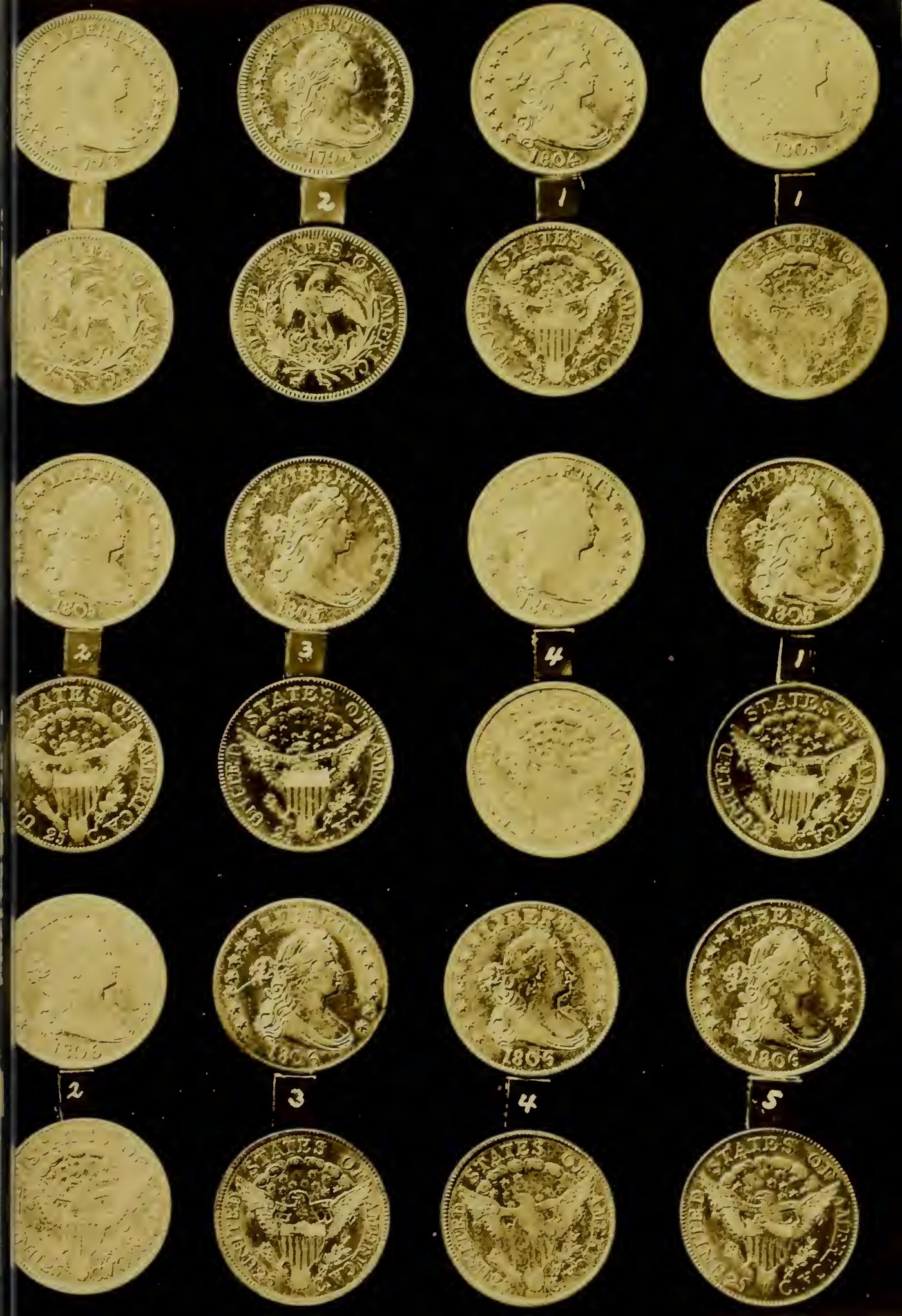
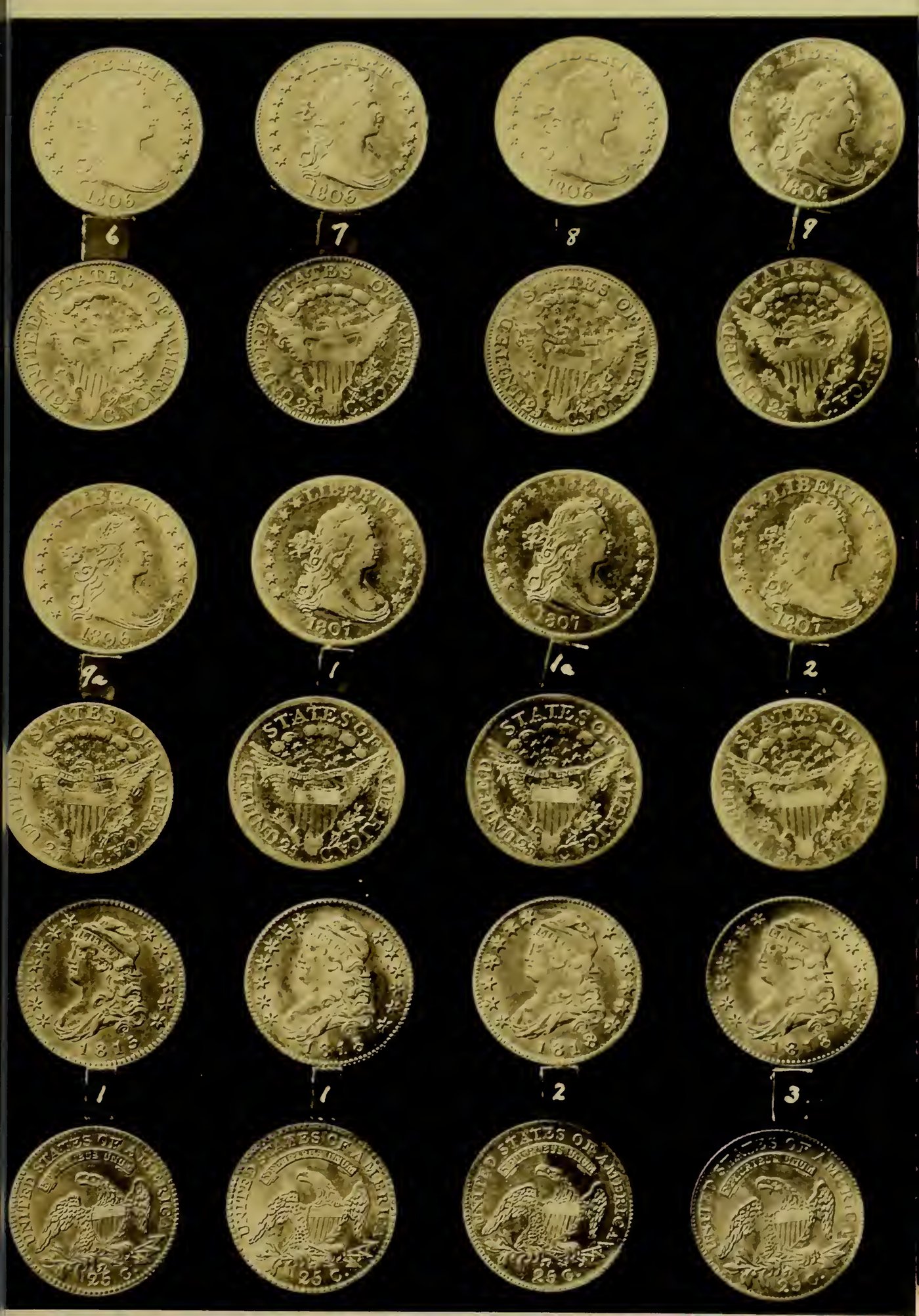
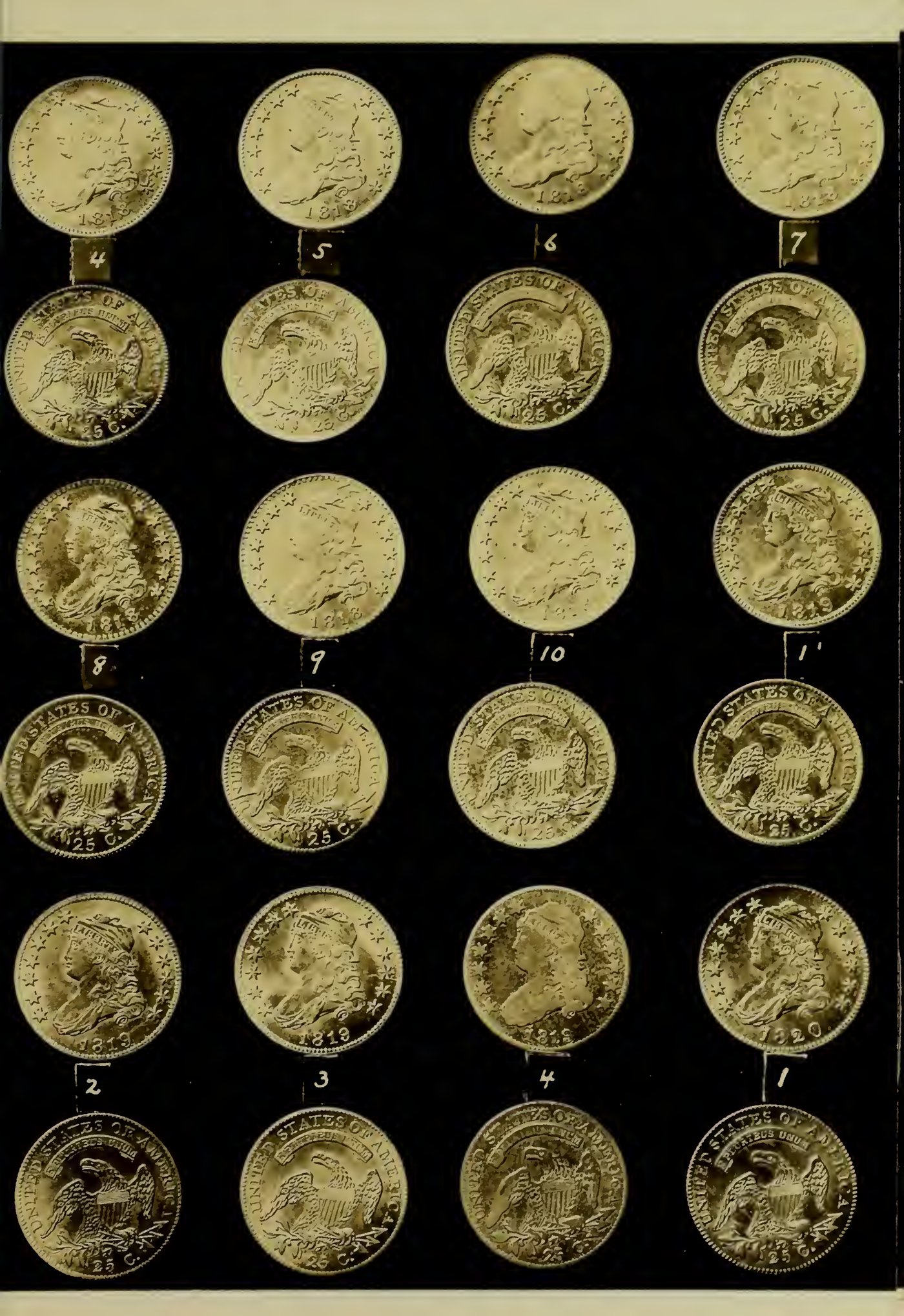
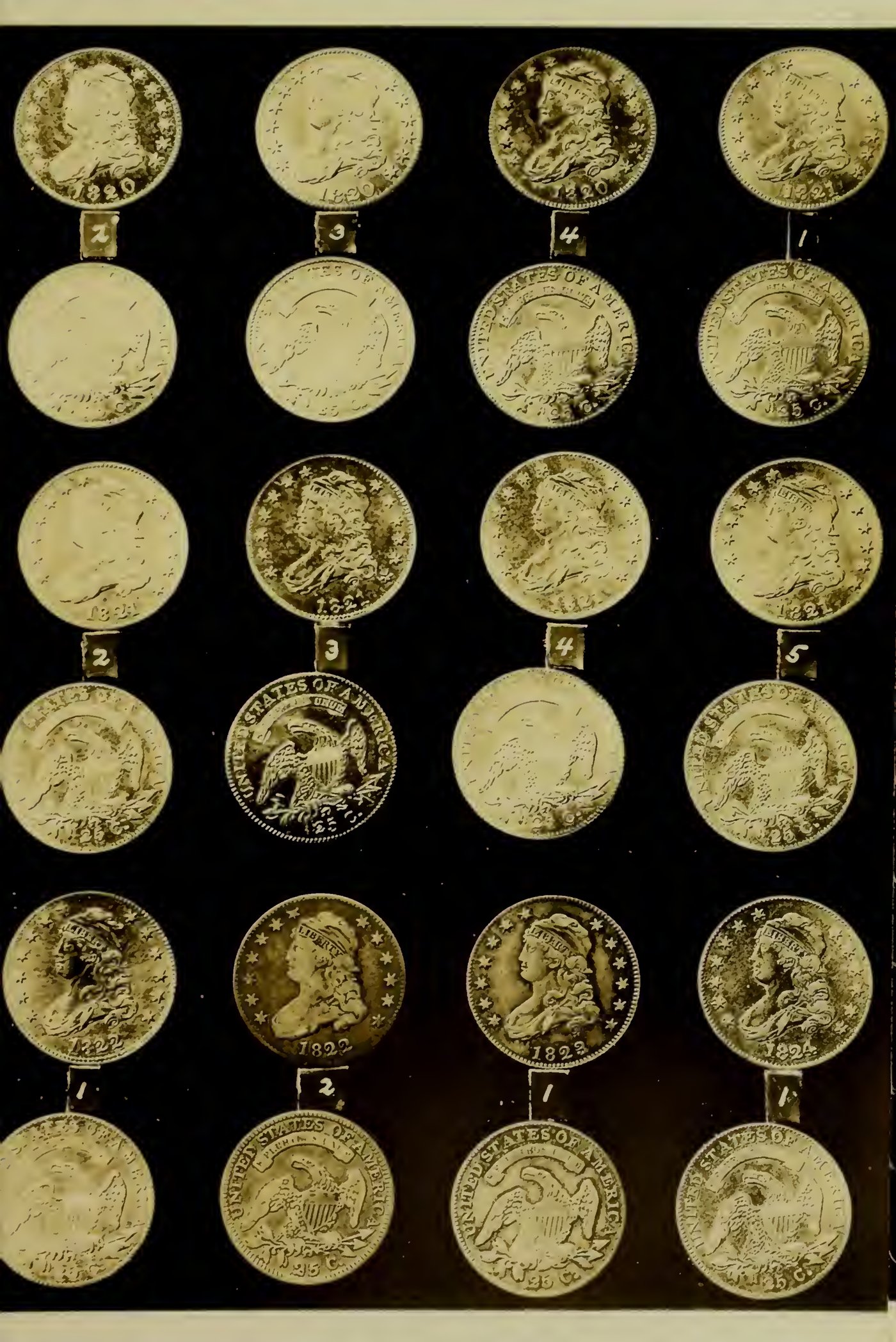
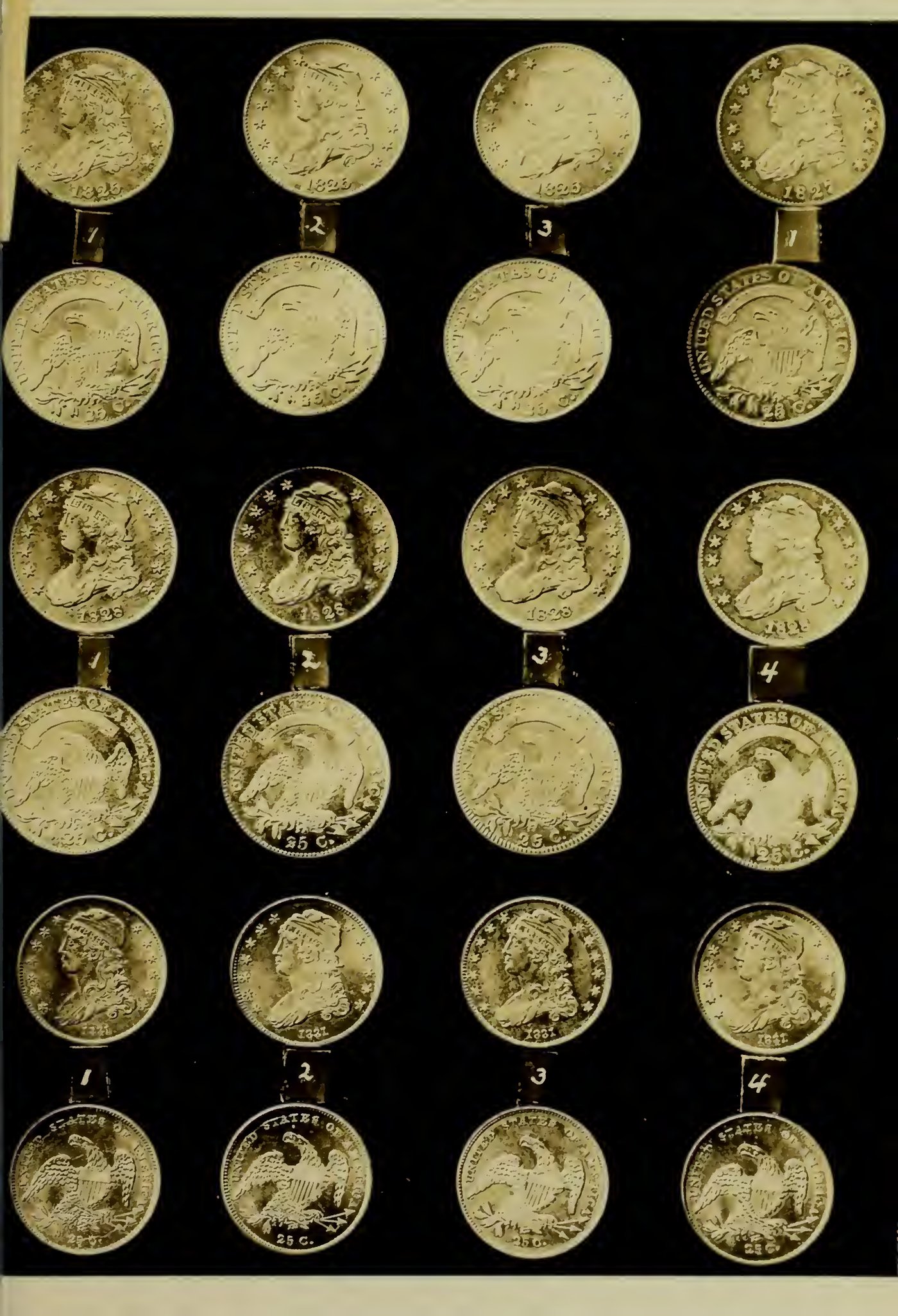
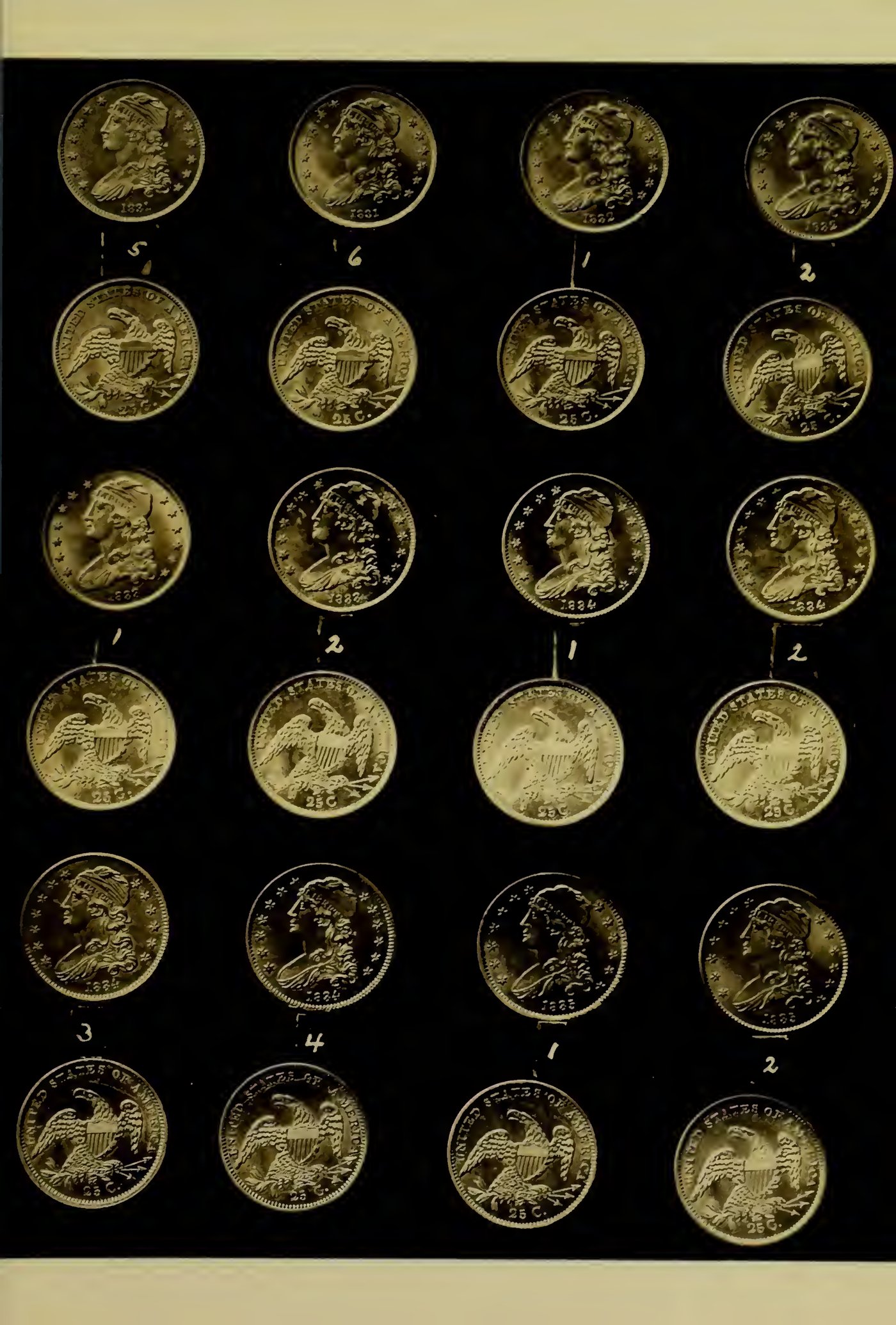
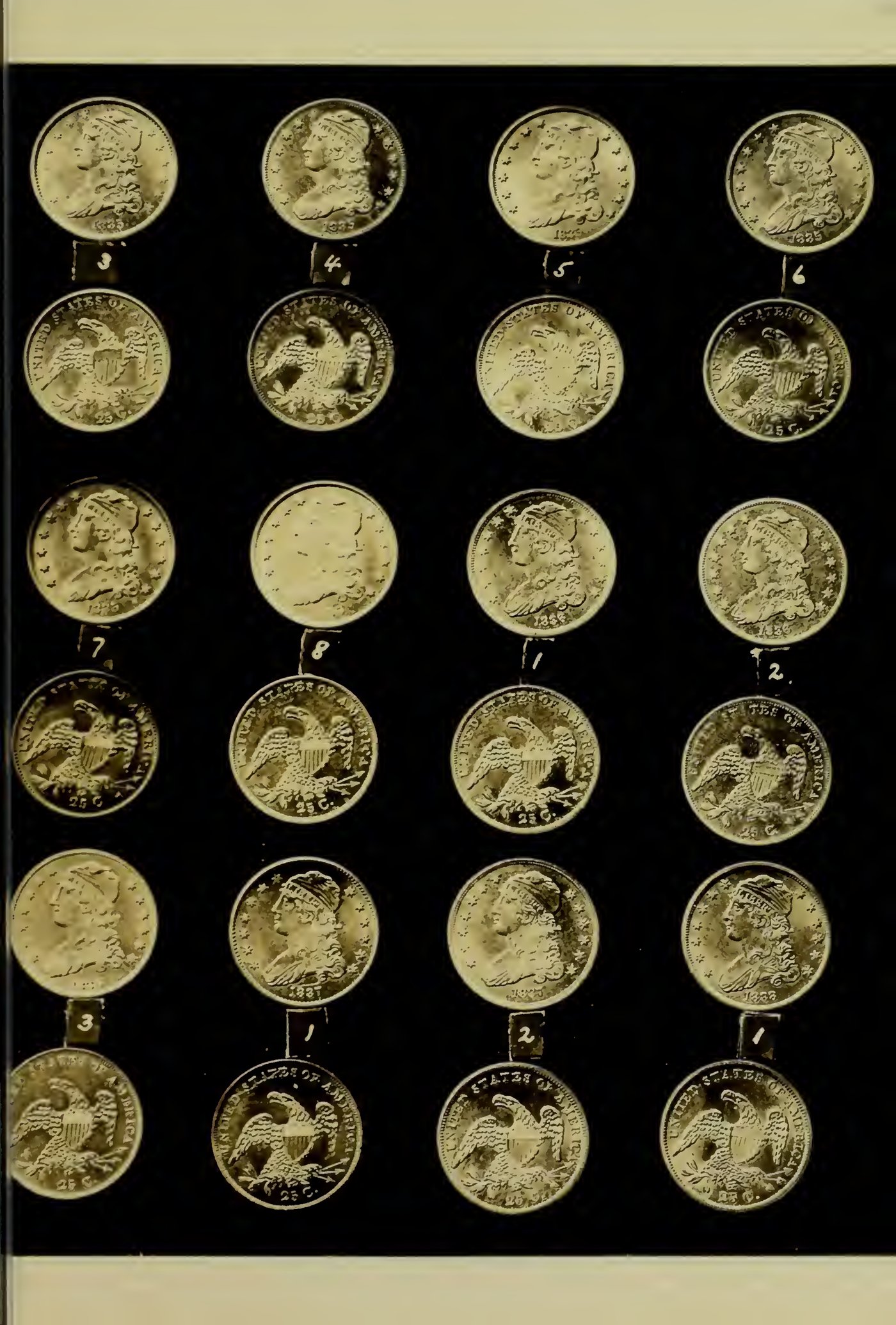
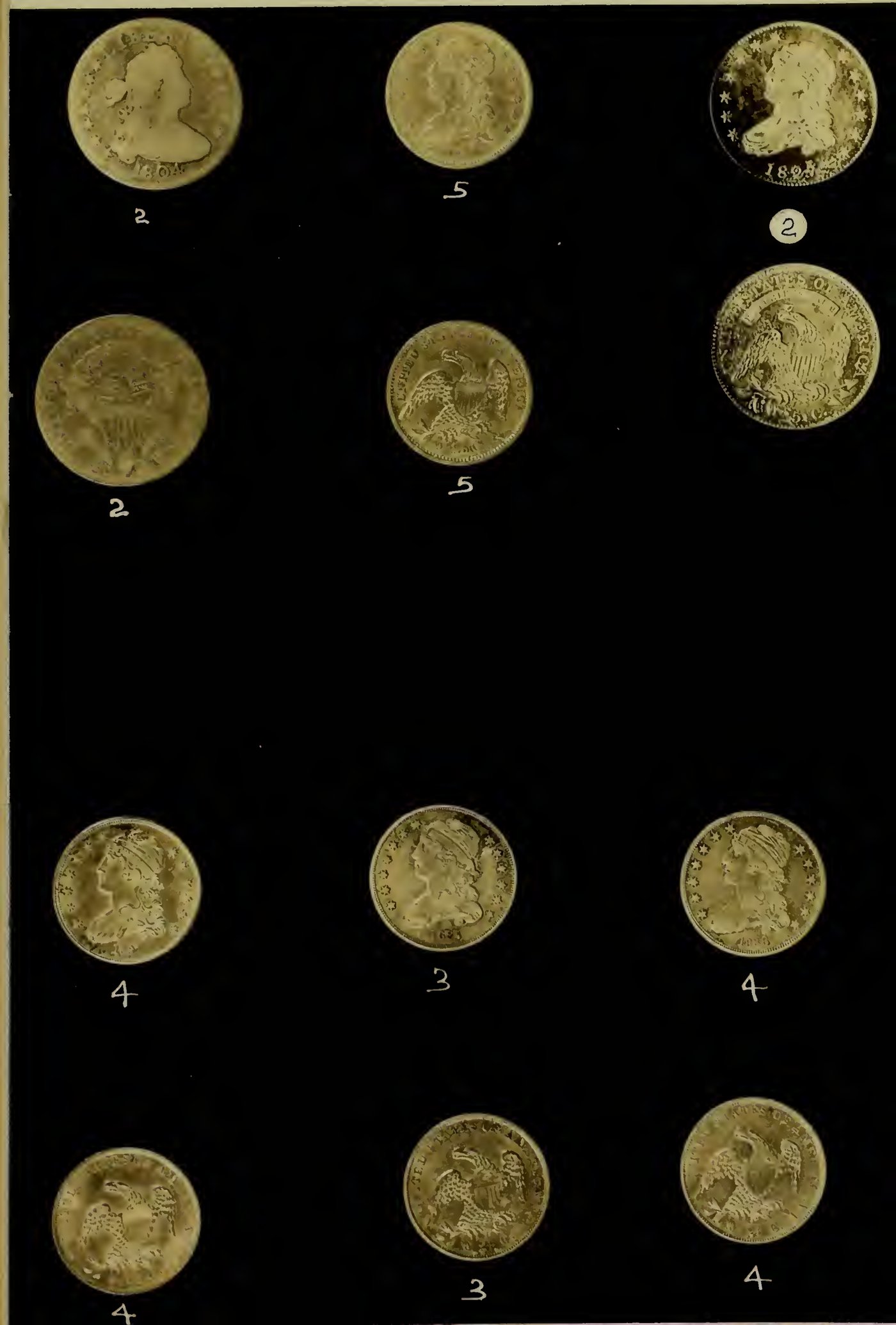
A. W. Browning, The Early Quarter Dollars of the United States (Wayte Raymond, 1925) — Internet Archive scan; public domain. Rights: public domain by US publication date (1925). The scan's repository attaches orphan-work boilerplate to the item; the OunceDesk rights record preserves both statements rather than quietly citing the convenient one — why all three rights statements are true at once →
Where to look
Attribution points, from Browning's own practice
Obverse
Date position relative to the curl and the border; star positions — especially the lower left star's distance from the drapery and the upper right star's distance from the cap; and on the Draped Bust issues the spacing of the date digits. Browning's descriptions are almost always relative ("most distant from bust", "nearer than in No. 2"), which means you cannot attribute from a single description — you attribute by elimination across a date's set. That is what the plates are for.
Reverse, Draped Bust (1804–1807)
The arrow count in the eagle's claw — Browning and Haseltine both use it, and the counts vary wildly: Haseltine describes 1805 and 1806 reverses with 8, 11, 12 and 13 arrows. Also the position of 25 C. relative to the eagle's tail and the arrowheads, and whether the olive branch touches the C.
Reverse, large size (1815–1828)
The ends of the scroll carrying E PLURIBUS UNUM, read against the letters above: "Ends of scroll: left under upright of D; right under centre foot of A." This is the series' signature diagnostic and unique to it — the scroll was in the master die, so the legend's position relative to the scroll identifies the working die.
Reverse, reduced size (1831–1838)
The scroll is gone. Diagnostics shift to the size of the legend letters (Small vs Large Letters), the size and placement of 25 C., the shape of the base of the 2 (curved or flat), the arrowhead sizes — and, a period charm, whether the eagle has a tongue: Browning uses "the eagle has no tongue" as a working diagnostic throughout 1831–1835. Haseltine's structural note makes berries a dating test rather than a variety test: "From this date, to the reverse of the 1838 Liberty seated, the olive branch has no berries."
Twelve lessons, ranked for pedagogy
The teaching set
Chosen for what each one teaches, not what it costs, and balanced across the three sub-runs. Survival figures are PCGS estimates observed 2026-08-24; variety counts are Browning's.
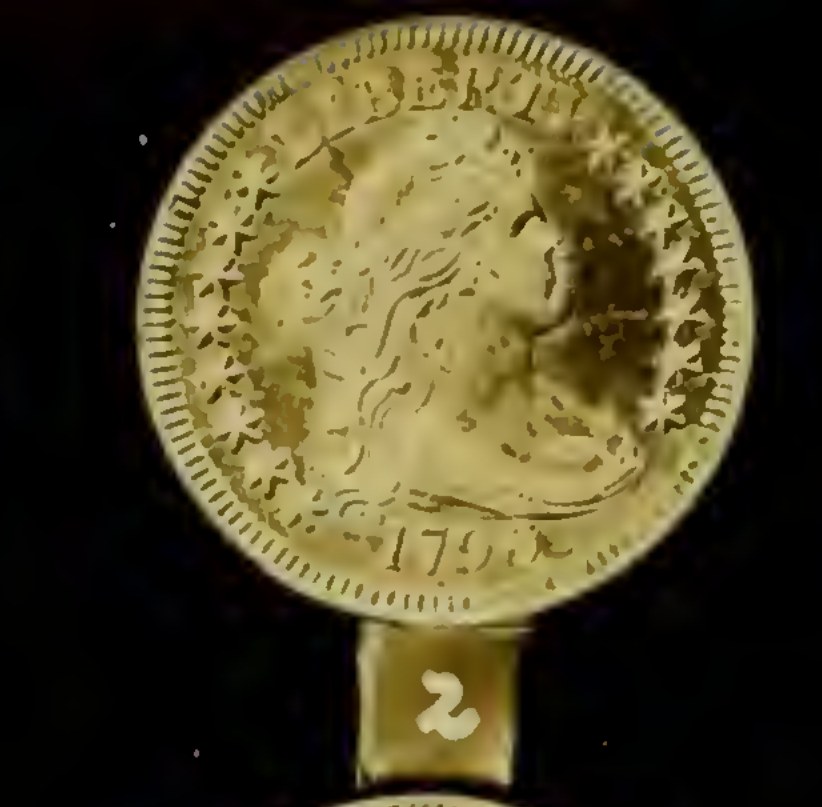
11796 B-1 and B-2 — an entire type in two coins
Two obverse dies, one reverse die, 6,146 pieces attributed, a single year. Teaches the vocabulary with nothing to confuse it, and teaches the series' first lesson about the record: 6,146 is 5,894 + 252, two delivery periods merged. The attribution is a single feature — B-1 has the date unevenly spaced with a low 6; B-2 has it evenly spaced with the 6 high and near the bust — which is why PCGS nicknames B-1 "Low 6". Also the coin with no denomination anywhere on it.
PCGS: 650 / 90 / 5 · R-5.7 · record $1,740,000 MS66 (Heritage, January 2022) — the series record
The 1796 issue page →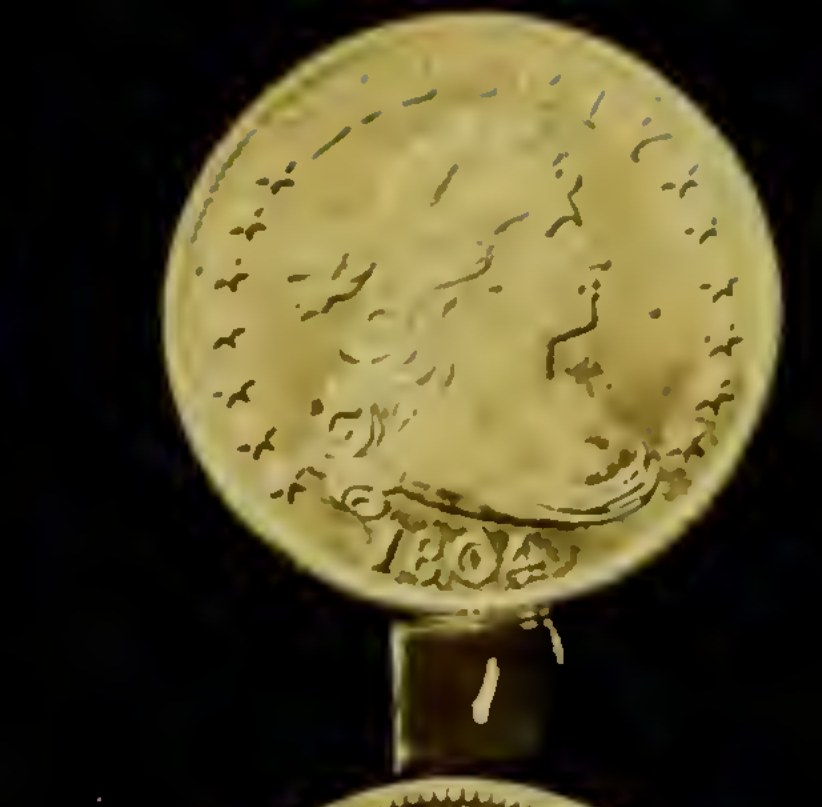
21804 — the reverse that added the value
Thirteen stars replace fifteen; the small eagle is replaced by the Heraldic Eagle; and 25 C. appears for the first time. Teaches that a "type" is a bundle of independent changes — and that the most consequential one here is a piece of information, not an image.
PCGS: 387 / 6 / 2 · R-6.2
The 1804 issue page →31806/5 — reading an undertype
The 5 shows under the 6; Haseltine's description is a model of the genre — "the 5 shows distinctly under the 6" with a full account of which letters are defective. Teaches undertype reading on a coin common enough to buy.
PCGS: 1,250 / 25 / 1 · R-4.9 · record $188,000 MS66 (Stack's Bowers, May 2015)
The 1806/5 issue page →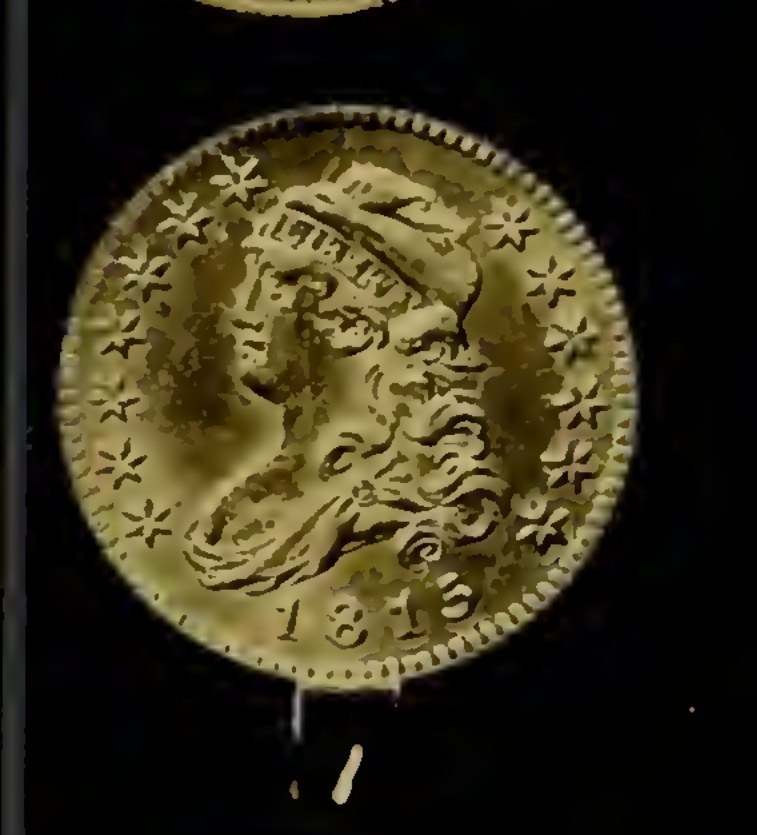
41815 B-1 — one variety, and the dies that got away
The only 1815 marriage. Its importance is what Browning noticed around it: "While but one variety has been found, apparently dies were engraved for a second obverse and reverse… See 1818 No. 1." Teaches that a variety's evidence can lie three years in the future — and introduces the shelved-die mechanism that explains the whole middle of the series.
PCGS: 1,875 / 67 / 6 · R-4.6
The 1815 issue page →51818/5 — the die that waited three years
The 1815 obverse, overdated, paired with a reverse whose 5 in 25 C. is "the same style 5 as in regular die of 1815, which is not found in any other reverse of 1818." Teaches how a die-marriage argument is actually made: not from the overdate alone but from a punch shared with the earlier year.
PCGS: 1,250 / 110 / 16 · R-4.9 · record $176,250 MS67★ (Heritage, November 2013)
The 1818/5 issue page →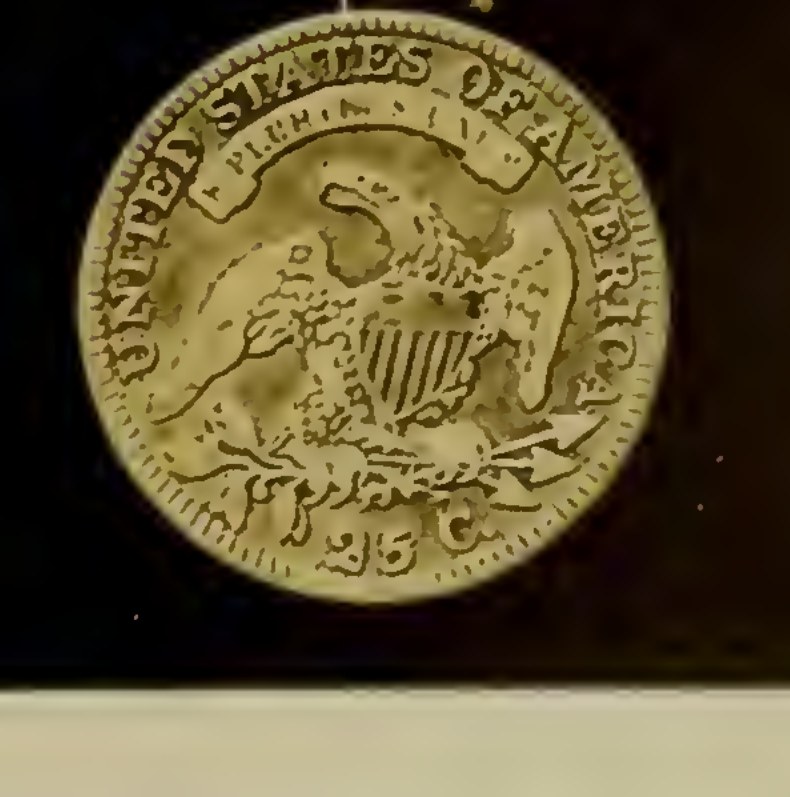
61822 25/50 C. — the engraver reached for the wrong punch
The denomination punched as 50, then corrected to 25, both visible. Browning, dryly: "the engraver evidently mistook the die for that of a 50 cent piece, then corrected the error." Teaches the difference between a HUMAN error (a wrong punch) and a STEEL event (a crack) — the single most common beginner's confusion in every early-silver series.
PCGS: 42 / 2 / 1 · R-8.6 · record $184,000 MS66 (Heritage, April 2009)
The 1822 25/50C issue page →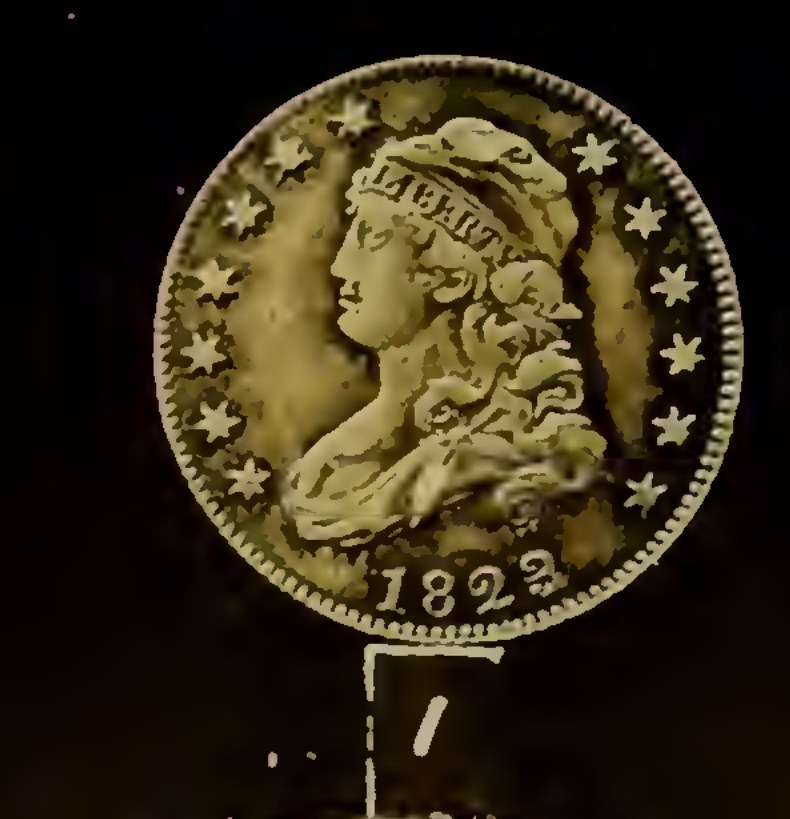
7The 1822 cascade — 1823/2, 1824/2, 1825/2 — one year's dies, four years' coins
The capstone of the series' mechanics. Three obverse dies prepared in 1822, unused, then overdated as deliveries were ordered — 1823 (17,800 pieces), 1824 (no delivery at all), 1825. Browning identified all three from the coins and said so in the 1822 entry, before describing any of them. Teaches that a die-variety reference is a reconstruction of a workshop, not a list.
1823/2: 33 / 2 / 0 · R-8.8 · 1824/2: 400 / 2 / 1 · R-6.2 · 1825/4/2: 237 / 3 / 0 · R-6.7
The 1823/2 issue page →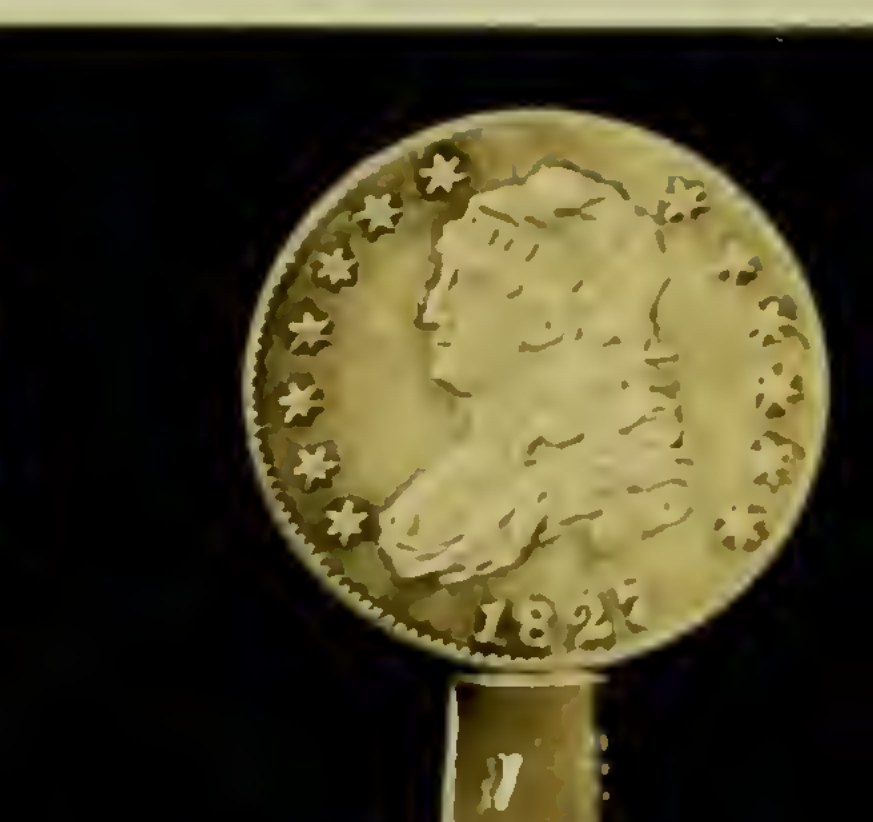
81827/3 Original vs. Restrike — the forensic case, made in 1925
Both share the same obverse. Browning separates them on the reverse: the Restrike's reverse is "From the same die as 1819 No. 2", its 2 has a flat rather than curved base, and its die crack leaves the border "from a point exactly as in the No. 2, of 1819." Then the verdict: struck in the Mint, but "from the indiscriminate use of dies of widely separated years… it is hardly proper to include it in the regular series." The best worked example anywhere of a restrike identified by die pairing rather than rumour.
Original (proof): 8 / 5 / 2 · R-9.6 · Restrike (proof): 15 / 15 / 2 · R-9.3
The 1827/3 Original issue page →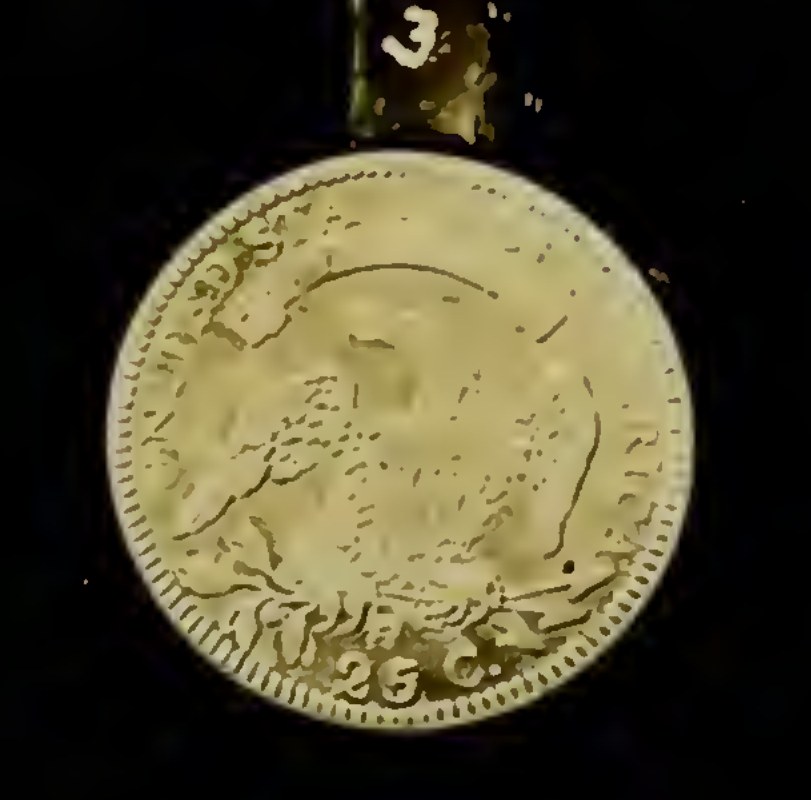
91828 B-3 — a reverse die comes back after six years
1828 No. 3 uses the 1822 25/50 C. reverse. Teaches that reverse dies were inventory, not vintage — a second, independent demonstration of the shelved-die mechanism, on the other side of the press.
The 1828 25/50C: 87 / 5 / 0 · R-8.1 · record $352,500 MS67★ (Heritage, November 2013)
The 1828 25/50C issue page →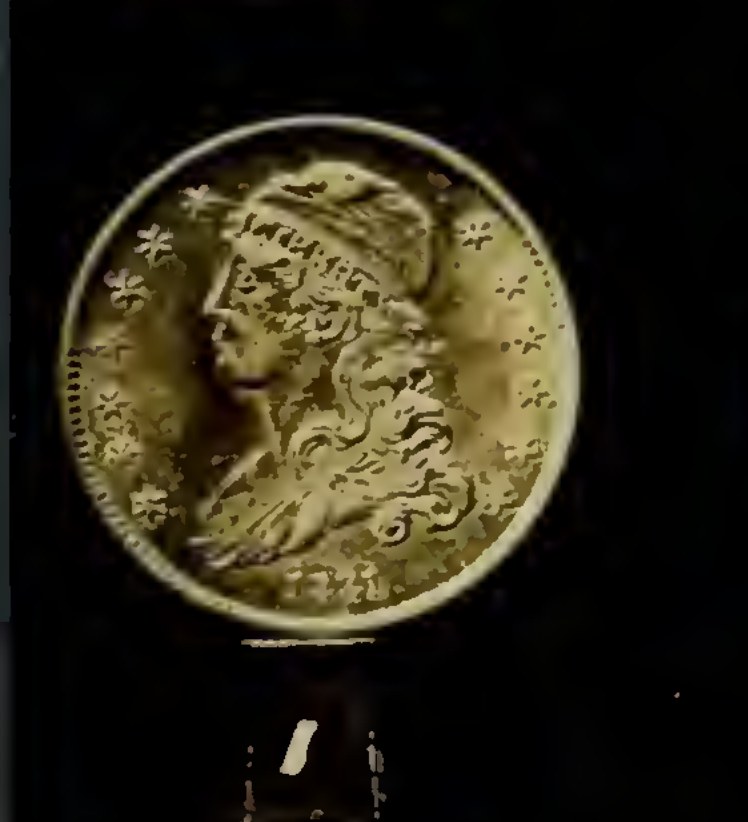
101831 Small vs. Large Letters — the reduced size, and what changed with it
The diameter drops, the scroll and E PLURIBUS UNUM disappear, and the reverse legend appears in two sizes across six Browning varieties. Teaches that a "type change" can be a manufacturing decision with no statutory basis at all: the Act of 1792 fixed weight and fineness, not diameter, so nobody had to authorise this. Also the point at which berry-counting stops working.
Small Letters: 3,625 / 225 / 21 · R-4.2 · Large Letters: 875 / 20 / 4 · R-5.2
The 1831 Small Letters issue page →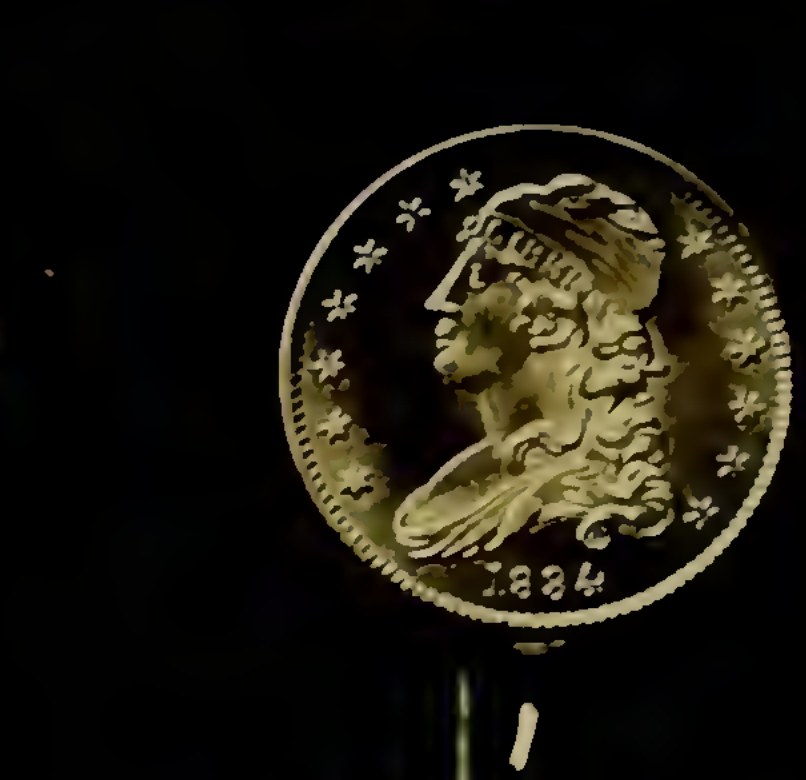
11The 1834–1835 die-crack sequences — die states as a method
Not one coin: the lesson is Browning's technique. For 1834 he tracks a reverse "cracked in three places" through its whole working life, crack by crack. Teaches that within a single marriage the coins form a TIME SERIES, and that late-state coins are evidence about how long a die lasted — the only handle this series has on how many coins a given marriage produced.
1834: 4,125 / 82 / 9 · R-4.1 · 1835: 5,250 / 70 / 4 · R-3.9
The 1834 issue page →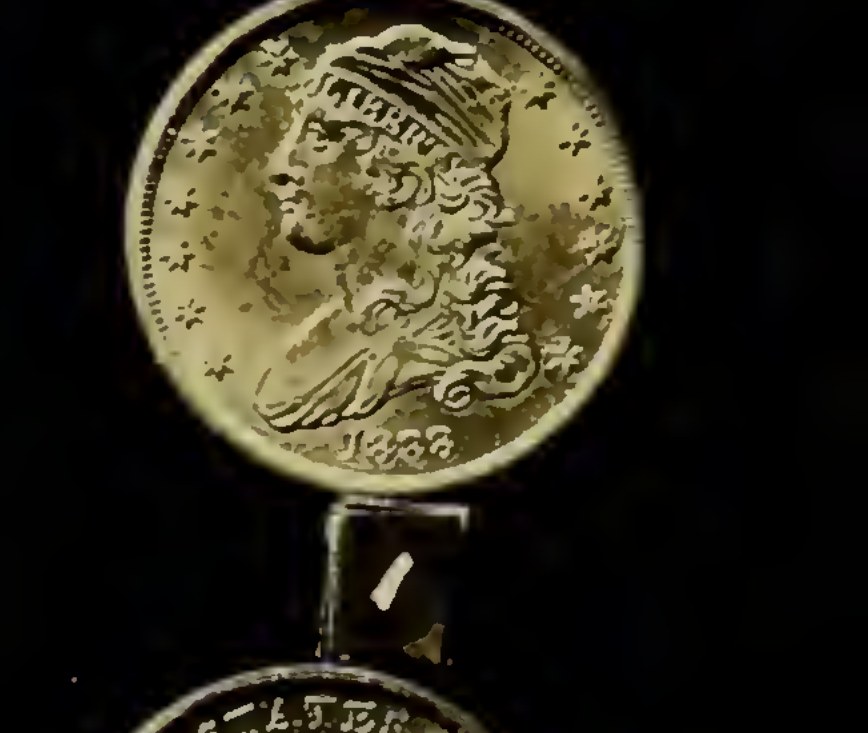
121838 — one variety, and the end
"But one variety of the bust type is known," sharing its reverse with 1837 No. 2. Teaches the series' terminal lesson: the year's 832,000-piece delivery covers both this coin and the Liberty Seated quarter, and Browning refused to split it. Any "1838 Capped Bust mintage" is a modern reconstruction.
PCGS: 1,625 / 67 / 7 · R-4.7
The 1838 issue page →The boundary, set once and never moved
Haseltine's quarter section ran 1796 to the 1838 bust type in 1881; Browning put the same span in his title in 1925; Tompkins and Rea et al. kept it in 2008 and 2010; PCGS's categories end at 1838. Unlike the half dollars — where the 1794–1836 boundary was independently rediscovered four times — here it was simply inherited, intact, for 145 years. There is no rival numbered checklist for any sub-span, and the John Reich Collectors Society covers bust coinage across denominations rather than the quarter alone, so no club's membership rule argues for a seam.
What this page does not do
It does not reproduce numeric rarity ratings for individual Browning varieties — those are the modern references' work (Tompkins 2008; Rea, Peterson, Karoleff & Kovach 2010), in copyright and not held. Browning's own prose ratings are held and public domain, and tabulating them into a free rarity scale is recorded as this series' best open task. And it does not carry variety diagnostics this reference cannot verify: where Browning's plates do not label the feature that separates two catalogue varieties (the 1819 and 1820 digit sizes, the 1831 letter sizes), the issue pages say so instead of guessing.
Sources
OBSERVED
57 sources
ESTIMATED
1 source
DERIVED
1 source
Sourced figures on this page trace to the ledger below. Editorial judgement is labelled as ours, and prices we have not sourced are not published.
View all sources & evidence methodology →Continue: the Browning bookkey dates & survivalcollecting pathwaysyour checklist
Quotations and plate imagery are from Browning 1925 (S5), public domain by US publication date and held in the OunceDesk Archive; Haseltine's diagnostics from the 1881 Type Table (S6), held; survival figures PCGS CoinFacts' (S30), observed 2026-08-24. Browning is quoted on dies and checked on numbers — his 1823 mintage is wrong by a factor of 6.6, and the correction is on the 1823/2 page.