CoinsEarly QuartersHistory
The complete history
No other early federal silver series has a shape like this one. The quarter dollar appears in 1796 and stops; returns in 1804 and stops; returns in 1815 and stutters through four more blank years; shrinks in 1831 without anyone's permission; and ends inside 1838. The story is the absences — and unusually, the reason for them is documented, in the Mint's own words.
The mechanism behind every gap
Depositors chose the denominations
Until the Act of February 21, 1853, the Mint coined what the depositors of bullion asked for — and depositors wanted the coin that returned their value fastest, which meant half dollars. Director Samuel Moore said it plainly, reporting on a year of 4,004,180 half dollars and nothing else in silver:
"A wish to expedite the issues from the Mint… has induced the coinage, exclusively, [of] half dollars; that of the smaller denominations being suspended throughout the year… leaving the circulation of small coins to be supplied by the accustomed fractions of the Spanish dollar, aided by occasional issues from the Mint." Director Samuel Moore, report for 1826 (MR1826)
That single sentence explains 1817, 1824, 1826, 1829 and 1830 — and by extension 1798–1803 and 1808–1814. The quarter dollar was not suppressed; it was skipped. For most of this series' life the American quarter was the Spanish colonial two-reales — and the Mint's own officers said so. Director Samuel Moore, reporting on 1826: the pressure of silver deposits "has induced the coinage, exclusively, [of] half dollars; that of the smaller denominations being suspended throughout the year… leaving the circulation of small coins to be supplied by the accustomed fractions of the Spanish dollar, aided by occasional issues from the Mint." Twenty-seven years later the Director for 1853 was still describing "the old and much-worn Spanish fractions of a dollar, the value of which is diminished from 10 to 20 per cent." Six and a half million federal quarters in forty-three years, against a foreign coin already in every pocket: the phrase "two bits" is the survival of the competitor, not of the coin.
The eighteen blank years
18 of 43
1798–1803, 1808–1814, 1817, 1824, 1826, 1829, 1830. Each blank is evidence, not a gap in research: a year whose Mint report lists the denominations coined and does not include the quarter dollar. The reports are all held, and cited year by year in the ledger.
I · 1796 — one year, and then nothing
The Act of April 2, 1792 created the denomination on paper: "Quarter Dollars — each to be of one fourth the value of the dollar or unit, and to contain ninety-two grains and thirteen sixteenth parts of a grain of pure, or one hundred and four grains of standard silver." Four years passed before anyone struck one. Director James Ross Snowden, reading the Mint's own bullion journals in 1860: "In the year 1796, the quarter dollar and dime were added to the coinage. The first delivery of the former occurred on the ninth of April, amounting to 1800 pieces."
The record's 1796 row closes at 5,894 pieces — less than $1,500 of face value — with 252 more delivered in the 1797 period from the same dies. Robert Scot's Draped Bust obverse carried fifteen stars; the reverse, a small eagle on clouds in a wreath; and nowhere, on either side or the edge, a statement of value. You were expected to know what it was worth from its size, in a country whose pockets were full of Spanish two-reales of roughly that size. Then six years of nothing: the Mint's comparative statement for 1798–1802 lists eight denominations and not this one.
Why a quarter at all in 1796, and why then nothing? No located document says — not who ordered the coins, nor why nobody ordered more. The best available answer is reconstructed from the later policy statements above, and this reference labels it as a reconstruction: someone deposited silver and asked for quarters, once; and every incentive in the building — the depositor's speed, the Mint's throughput, the two-reales already doing the job — pointed away from asking again.
II · 1804–1807 — the second appearance
When the denomination returned in 1804 it had learned to introduce itself: thirteen stars, Scot's Heraldic Eagle reverse, and — for the first time on this coin — a value, 25 C. The run was brief and steep: 6,738 pieces in 1804, then 121,394, then 206,124 (including the 1806/5 overdate), then 220,643 in 1807, the largest Draped Bust year. And then the longest silence in the series: seven consecutive years, 1808 through 1814, without a single quarter dollar. Dickeson, writing in 1859, registers the gap as a plain fact — the 1815 quarter came "there having been no emission of this denomination of coin since 1807."
III · 1815–1830 — the tangled middle
The third appearance opens with a statistic that still startles: the 69,232 quarters of 1815 — John Reich's Capped Bust, eight years after it reached the half dollar — were the entire silver coinage of the United States that year. The report's own arithmetic proves it: 69,232 pieces, $17,308, exactly a quarter each. Another 20,003 came out in the first days of 1816, before a barrel of wood ashes leaned against a wooden wall burned the Mint on January 11; no quarter bears the date 1816 or 1817.
Then 1822, the quiet year that generates almost everything collectors now chase. The Mint prepared four obverse dies and used one. Browning, working backwards from the coins in 1925: "Three other obverses evidently were prepared, which subsequently became over dates… See 1823, 1824, and No. 1, of 1825." The shelved dies became the 1823/2 (17,800 delivered, thirty-three known), the 1824/2 (struck for a year with no delivery of record at all), and the 1825 overdates. The same year's second reverse die carried the famous blunder — the denomination punched as 50, corrected to 25 — and that die came back in 1828, six years later, to strike the series' other great variety. In a denomination made in twenty-five years out of forty-three, dies outlived their dates; that single mechanical fact produces almost every valuable coin in the series.
The decade's ledger reads like a stutter: 17,800 in 1823, nothing in 1824, 168,000 in 1825, nothing in 1826, an orphaned 4,000 in 1827 that match no known coin, 102,000 in 1828, nothing in 1829 or 1830. Behind it, Moore's policy — and his promise, made in the 1826 report and repeated in 1831, "for devoting to the emission of the smaller divisions of our silver coin, every desirable attention."
IV · 1831
A new size, and no act of Congress
Moore kept his promise in 1831: 398,000 quarters after two blank years, more than any year since 1807 — and the coin itself came back changed. Snowden, from inside the Mint: "In 1831, a very marked change occurred in the quarter dollar, the diameter having been considerably reduced, with a consequent increase in thickness. The change of type, however, only affected the size of the devices… and the omission from the reverse of the scroll bearing the motto 'e pluribus unum.'"
No act of Congress authorised it, and none was needed: the 1792 statute fixed weight and fineness, not diameter, so a smaller, thicker planchet of the same 104 grains was within the Mint's discretion. No document in the Archive proposes, authorises or explains the decision. It is the largest undocumented decision in the series, published here as what it is: an administrative change of manufacture whose author is unknown.
A historiographic footnote worth keeping: Browning's 1831 paragraph in the 1925 standard reference is Snowden's 1860 sentence, near-verbatim, without attribution. The reference's descriptive history is sometimes transmission rather than observation — which is why this site quotes Browning on dies and checks him on everything else.
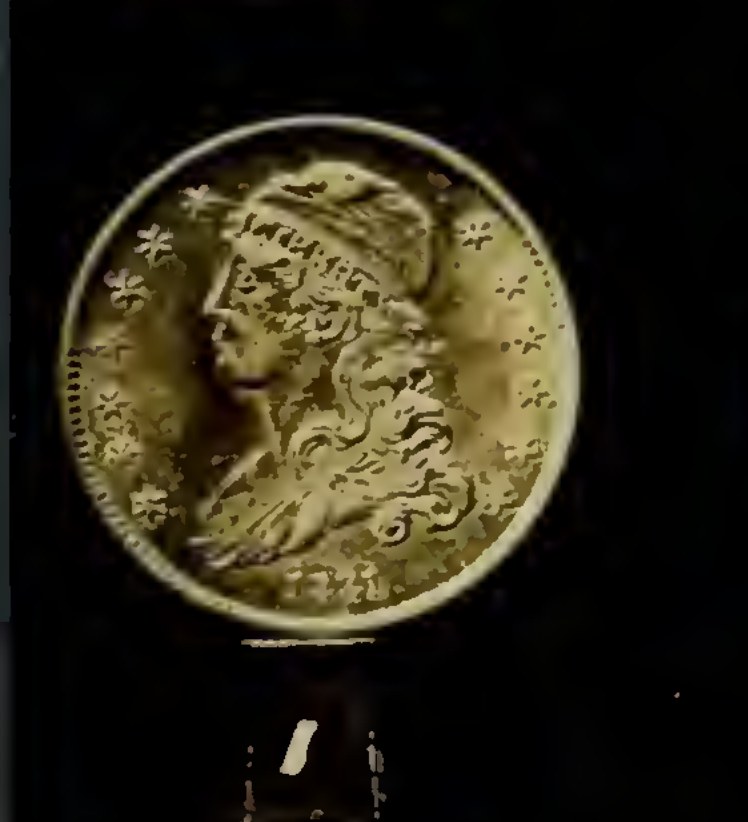
V · 1832–1838 — volume at last, and the end
The 1830s finally look like a working denomination: 320,000, then 156,000, then 286,000, then the series' one enormous year — 1,952,000 pieces in 1835, nearly a third of everything the Mint made in forty-three years. On March 23, 1836 the first steam coinage in America was executed at the Mint, and the same report announced dies hubbed entire, "exact fac-similes of one another" — the sentence that ends the die-variety era across every denomination. The quarters of 1836 are among the last American silver struck by hand.
The series ends inside a single number. The Director's Statement A for 1838 records 832,000 quarter dollars in one line — the last Capped Bust quarters and Christian Gobrecht's first Liberty Seated ones together. Browning refused to split the figure and closed his book on the refusal: "the number of pieces made of either type is unknown." The 366,000 printed for the 1838 Capped Bust today is a modern partition of that recorded delivery, and this reference publishes it only as such. The branch mints opened the same year, but no branch struck a quarter until the 1840-O: this series is Philadelphia's alone, first coin to last.
VI · The aftermath
1834–1853: the melt, and the Act that ended the arrangement
The Act of June 28, 1834 left silver undervalued at the Mint, and Laughlin names this denomination in the outcome: "in this period from 1834 to 1853, even the subsidiary silver, the half-dollars, quarters and dimes, had been melted and exported." The arbitrage identity made denomination irrelevant — four quarters contained exactly as much pure silver as a dollar piece. The Mint's own 1853 report puts numbers on it: old-standard silver was issued at 116 4/11 cents per ounce while the metal fetched 121, so "coin issued under the former standard would be withdrawn from circulation." A 4% premium of metal over face, standing for nearly two decades, applied to a thinly-held coinage of 6.5 million pieces. The Act of February 21, 1853 rescued the denomination by making it deliberately light — and every pre-1853 quarter became bullion at that moment. Notably, when the Mint's own assayers described the recoinage of worn pre-1837 silver in 1850, they discussed half dollars, dimes and half dimes and did not mention quarters at all: whatever came back for recoinage in the 1840s, the quarter was not a notable part of it.
And the coins that had already circulated were barely there to melt. The early quarters have no hoard of their own — and the best measurement of that comes from the greatest early-silver hoard on record. The Economite Treasure, opened at Economy, Pennsylvania in 1878 and inventoried in The Coin Collector's Journal in March 1881, held $75,000 face in silver: 117,184 early half dollars, 3,708 early dollars — and 400 quarter dollars, 1818–1828, in one unitemised line, the only denomination the compilers did not think worth breaking down. Quarters were 7.7% of half-dollar output across the early period but 0.34% of the half dollars in that vault: in the largest documented accumulation of early American silver, the quarter dollar is roughly twenty-three times under-represented relative to its own coinage. (That ratio is computed here from two held sources — an analytical result of this reference, not a published figure.) The half dollar was bank reserve, counted in bags and left alone; the quarter was change, and change circulates. Note the date range, too: not a single pre-1815 quarter, in a hoard that held 150 half dollars of 1794 and 800 dollars of 1795.
The arc closes on itself. The early quarter existed intermittently for forty-three years because depositors preferred half dollars and the two-reales already filled its place in commerce. It was then destroyed, between 1834 and 1853, by the same arbitrage that had suppressed it — and the 1853 Act that finally guaranteed a federal quarter in circulation did so by taking the choice away from depositors and making the new coin deliberately light, marking it with arrows at the date and rays on the reverse. No hoard. No government recall — no early quarter was ever redeemed or demonetised by statute; the 1853 Act reduced the weight of NEW coins and left the old ones to the market, which took them. And not the Pittman Act: the 1918 melt consumed silver DOLLARS, and its 270-million-piece figure has no business on this page.
The cast
Four people, and two nobody can name
Samuel Moore, Director 1824–1835
The one man in the record who explains the blank years — and the reason the quarter became a permanent coin, via the promise he made in 1826 and kept in 1831. He is not a name anyone knows.
John Reich, Assistant Engraver 1807–1817
Hired at $600 a year expressly to stop him leaving for Europe. His Capped Bust reached the quarter in 1815, eight years late, because there were no quarters to put it on — Snowden records his silver brief was "confined to the preparation of dies for the half dollar only."
The unnamed engraver of 1822
Somebody punched 50 into a quarter-dollar reverse die and corrected it to 25. Two of the series' most valuable coins exist because of the slip — and 1822 falls in the interval after Reich left and before William Kneass arrived (January 1824), so the record names no engraver at all.
The depositors
Nameless, and the most important actors in the series: the people who, in eighteen of forty-three years, did not ask for quarters. Not one person who DID ask for a quarter dollar can be named from any located document.
The man who organised the series itself — A. W. Browning, whose 1925 reference defined its ninety varieties and photographed them all — has a chapter of his own: The Browning Book →
Sources
OBSERVED
57 sources
ESTIMATED
1 source
DERIVED
1 source
Sourced figures on this page trace to the ledger below. Editorial judgement is labelled as ours, and prices we have not sourced are not published.
View all sources & evidence methodology →Continue: varieties & the plateskey dates & survivalthe Browning bookyour checklist
Every quotation on this page is from a document held in the OunceDesk Archive: the Mint's contemporaneous reports (MR keys in the ledger), Snowden's 1860 Mint Cabinet description (S8), Dickeson 1859 (S7), Browning 1925 (S5), and the standard economic histories (S17–S21). The explanation of the 1796 start-and-stop is a labelled reconstruction from later policy statements — no document explains that year, and the gap is recorded in the references.