Figures classed OBSERVED / DERIVED / ESTIMATED throughout; evidence ledger published. Prices dated August 2026. Critic-gate reviewed.
In July 1792, seventy-five dollars’ worth of silver was delivered to John Harper’s cellar workshop at Sixth and Cherry Streets in Philadelphia, because the nation’s Mint had been authorized but its building wasn’t finished. Two days later, Thomas Jefferson’s account book records the return: “Rec’d. from the mint 1500. half dismes of the new coinage” (OBSERVED — his actual ledger). The first coins of the United States, struck in a basement, from silver the Secretary of State deposited himself. That November, George Washington announced the “small beginning” to Congress.
Then Jefferson did something every reader of this site will understand in their bones: he kept some, spent the rest carefully — and people started pulling them out of circulation almost immediately, because a first-year coin from a brand-new country was obviously worth keeping. (The beloved story that Washington donated his household silverware for those first coins is legend — 2017 archival scholarship traced the silver to Jefferson’s deposit, and found no evidence Martha modeled for Liberty either. The documented version is better anyway: the author of the Declaration of Independence personally ran the errand.)
One of those 1,500 half dismes — the finest survivor, which descended in Mint Director David Rittenhouse’s family — sold in 2018 for $1,985,000 (OBSERVED). Another was found in pocket change, bought for less than a dollar, and sold for $104,625. Two hundred and thirty-four years later, the instinct that made someone palm a shiny new half disme in 1792 is the same one that makes you check the date on every quarter in your change.
This is a history of that instinct.
The oldest hobby
Coin collecting is older than most countries. Suetonius records that the emperor Augustus gave gifts of “coins of every device, including old pieces of the kings and foreign money” — the earliest recorded figure to treat old coins as objects worth keeping for their own sake. Fourteen centuries later, Petrarch — yes, the poet — was buying ancient coins from vineyard diggers and presenting a selection of Roman emperors to the Holy Roman Emperor as a moral lesson in leadership. By the Renaissance every serious European court kept a Münzkabinett, and the field earned its traditional epithet — “the hobby of kings” — the honest way: for centuries it was largely a pursuit of courts and the rich.
America democratized it, in three waves worth knowing:
The penny board (1934). A Wisconsin man named Joseph Post invented a piece of cardboard with a hole for every date and mintmark of the Lincoln cent. Whitman Publishing bought the idea in 1935, and a young Whitman employee named R.S. Yeoman turned it into the blue folder every collector still recognizes — then wrote the Guide Book of United States Coins (1946), the “Red Book,” which its publisher says has sold some 25 million copies. The genius of the folder: it converted loose change into a set with holes in it.
Human beings cannot abide a set with holes in it.
The great change-hunt (1930s–1964). For three decades, the entire hobby was available at face value. Every roll of dimes might hold a Mercury; every dime, quarter, and half in your pocket was 90% silver, because all of them were. Then the Coinage Act of 1965 pulled silver from the coinage, the Mint suspended mintmarks for three years specifically to discourage collectors, and the golden age of finding treasure in your pocket ended by legislation. (The silver didn’t stop being treasure — it just stopped being handed out at the register. Our melt table shows what those “worthless” 1964 quarters quote at today.)
The slab (1986). Dr. William Sheldon’s 1–70 grading scale — invented in 1949 for large cents — became universal, and in 1986 PCGS began encapsulating coins with guaranteed grades. Slabbing made coins tradeable sight-unseen, which made them an asset class, which made possible everything in the next section.
And one government-scale enrollment program: the 50 State Quarters (1999–2008), which the Mint itself estimates pulled 147 million Americans into checking their change, generated $6.1 billion in seigniorage, and which the Mint calls the most successful coin program in the nation’s history (OBSERVED).
The greatest stacks ever assembled
Every hobby has its Everest stories. Numismatics has these:
| Collector | Claim to fame | Dispersal |
|---|---|---|
| Louis Eliasberg | The only complete US collection ever assembled (finished 1950) | ~$45M across 1982–97 sales |
| King Farouk of Egypt | The 1954 Cairo palace sale — 2,798 lots; source of the $18.9M 1933 double eagle saga | 1954 Cairo dispersal |
| John Jay Pittman | Kodak engineer; second-mortgaged his house for the Farouk sale | $30M+ (1997–99) |
| Josiah K. Lilly Jr. | 6,125 gold coins, donated to the Smithsonian by Act of Congress | Backbone of the National Numismatic Collection |
| Harry W. Bass Jr. | Definitive early US gold by die variety | $83M+ (2022–23), to charity |
| D. Brent Pogue | Finest-known early federal coinage | $106.7M — most valuable ever auctioned |
| The Tyrant Collection | US exhibit alone insured for $100M; still growing | Not dispersed |
The only complete collection. Baltimore banker Louis Eliasberg set out to own one of every United States coin — every date, every mintmark, every denomination — and in 1950, with the delivery of the 1873-CC no-arrows dime, he did it. No one had done it before. No one has done it since. No one ever will again.
The king who bought everything. King Farouk of Egypt bought coins in bulk, indiscriminately, magnificently. When he was deposed in 1952, Sotheby’s needed 2,798 lots to sell the palace hoard. Buried in that 1954 Cairo catalog was a 1933 double eagle — a coin the United States considered stolen property. The US government asked Egypt to pull it from the sale; it vanished for four decades, resurfaced in a British dealer’s briefcase in a New York sting in 1996, survived a legal war, and sold in 2021 for $18.9 million — still the most expensive coin on Earth (OBSERVED).
The engineer who mortgaged the house. John Jay Pittman was a Kodak chemical engineer on a salary. In 1954 he took a second mortgage on his Rochester home to fly to Cairo for the Farouk sale. The collection he built on working wages sold for over $30 million in 1997–99; one coin he bought at Cairo for $635 brought $467,500.
The great collections weren’t all built on great fortunes. Some were built on conviction and a spare bedroom.
The modern records. The D. Brent Pogue collection — $106.7 million, the most valuable ever auctioned. The Tyrant Collection’s US exhibit alone insured for $100 million. And the market is not asleep: in December 2025 a previously unknown 1804 dollar — the sixteenth known, off the census since 1962 — surfaced and brought $6 million (OBSERVED). Somewhere out there, statistically, is the seventeenth.
| # | Coin | Price | When | Venue |
|---|---|---|---|---|
| 1 | 1933 Saint-Gaudens double eagle | $18,900,000 | Jun 2021 | Sotheby's |
| 2 | 1794 Flowing Hair dollar SP-66 | $12,000,000 | Jan 2022 | Private (GreatCollections) |
| 3 | 1787 Brasher doubloon (EB on wing) | $9,360,000 | Jan 2021 | Heritage |
| 4 | 1822 half eagle (Pogue) | $8,400,000 | Mar 2021 | Stack's Bowers |
| 5 | 1804 dollar Class I (Sultan of Muscat) | $7,680,000 | Aug 2021 | Stack's Bowers |
| 6 | 1787 Brasher doubloon (EB on breast) | $7,395,000 | Dec 2011 | Private |
| 7 | 1861 Paquet double eagle MS-67 | $7,200,000 | Aug 2021 | Heritage |
| 8 | 1903 Fengtien Tael (world record) | $6,900,000 | Aug 2022 | Beijing Chengxuan |
| 9 | 1794 Flowing Hair dollar MS-66+ | $6,600,000 | Aug 2021 | Heritage |
| 10 | 1804 dollar Class III — the 'Stack' discovery, 16th known, unseen since 1962 | $6,000,000 | Dec 2025 | Stack's Bowers |
Why your brain does this (the actual science)
Strip away the auction rooms and the hobby runs on four documented pieces of human wiring:
1. Physical things feel more ours. In controlled experiments, people value a physical version of a good significantly more than an identical digital one — tourists paid 48% more for a printed photo than the same photo as a file (OBSERVED — Journal of Consumer Research, 2018). The mechanism is “psychological ownership”: you can hold it, control it, place it in your story. A brokerage number is an abstraction with your name near it. A tube of Eagles is yours in a way your brain actually believes.
2. The set must be completed. Collecting research (Belk’s classic work; Carey’s set-completion modeling) shows that a defined set creates a standing psychological tension that each acquisition partially relieves — which is why the empty 1921 hole in a Morgan album generates more purchasing energy than any investment thesis ever written. Whitman figured this out with cardboard in 1935.
3. The hunt pays in dopamine. Coin roll hunting is a variable-reward loop — the same reinforcement schedule as a slot machine, which is why an hour of searching halves feels like an hour at a casino. With one difference: the worst possible outcome is that you return the coins at face value.
Gambling mechanics with a money-back guarantee.
The finds are real but thinning: a box of halves still turns up the occasional 40% Kennedy; 90% coins are rare. One CNBC-profiled hunter cleared ~$15,000 a year at it, mostly from halves. And the government itself was accidentally the greatest roll-hunt of all time — nearly 3 million Morgan dollars, mostly Carson City, discovered sitting in Treasury vaults and sold to the public in the 1970s GSA sales.
4. Friction is a feature. Behavioral economists found something remarkable: offered savings accounts with equal interest but different withdrawal restrictions, people put the most money in the most locked-up one (OBSERVED — NBER). Savers choose friction because they know their future selves. Physical silver is exactly that: the drive to the coin shop, the spread, the small ceremony of breaking a stack — every inconvenience stackers complain about is the mechanism that means the metal is still there in year ten, when the brokerage cash quietly wasn’t. (The lock only helps, of course, if what’s locked up holds value — see the honest page below.)
Add the inheritance thread — the hobby’s most-told origin story is a parent’s or grandparent’s coins arriving in a shoebox, history and family in one object — and you have the whole engine. (Sometimes the shoebox goes the other way: the “Traveller Collection,” 15,000 coins buried in cigar boxes since the 1930s, resurfaced in 2025 insured for over $100 million. Check the attic.)
The stack today
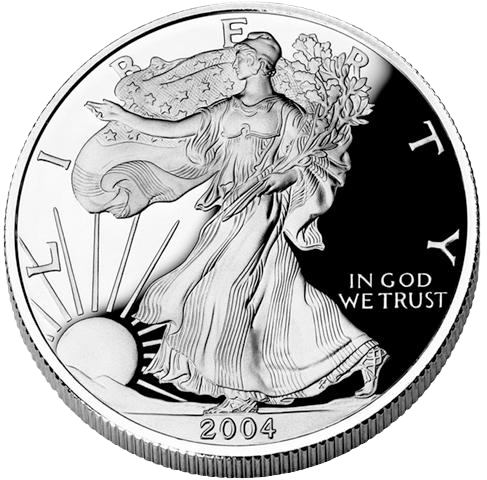
The modern scene would bewilder Eliasberg and delight him. A quarter-million-plus members on the stacking subreddits (third-party tracker counts, mid-2026). YouTube channels that do nothing but pour, sort, and photograph silver for six-figure audiences. A living dialect — monster box, milk spots, stack porn, constitutional silver, phyzz. And one legend with verified numbers: in February 2021 the internet tried to squeeze silver like a meme stock. Retail bought six million Silver Eagles in a month, the big ETF added a record 1,766 tonnes in a day, every major dealer halted sales, premiums hit 30% — and spot barely held $30 for a week. The paper market swallowed the wave whole. (The stackers got the last laugh anyway: even the worst-timed 2021 buyer, paying $40–43 all-in at the frenzy’s peak, is up roughly 60–75% at today’s ~$70 silver, with Eagles reselling near spot. DERIVED — and this time the division checks.)
The chart above holds the single most counterintuitive fact we found: American retail stackers buy dips, not breakouts. The record sales year (47 million Eagles, 2015) came with silver at $14–16. And in May 2026, with silver near $70, the Mint recorded its first zero-sales month for bullion Eagles since the program began in 1986 (OBSERVED).
The stack, as a community, quietly refuses to chase.
The honest page (read before you start)
House method: we attack everything we publish, including the hobby itself.
- The round trip costs real money. At mid-2026 premiums you pay ~15% over spot for an Eagle and sell near spot: silver must rise ~18% before your first dollar of profit. Generic bars cut the haircut to 8–10%. Premiums are the hobby’s expense ratio — know it going in. (Compare live dealer premiums.)
- Silver is not an index fund. Over 1980–2020 it badly lagged equities, and its early-2026 spike gave back over 40% in weeks. The case is diversification, insurance, and the psychology above — not expected-return dominance.
- Liquidity is asymmetric. That May 2026 zero-sales month cuts both ways: at euphoric prices, dealers’ bids soften exactly when you’d want to sell.
- Fakes are industrial now. Over $126 million in gold-scam losses were reported in 2024 alone, and counterfeit silver runs on the same rails. Reputable dealers, a scale, and a Sigma verifier are not optional. (Our counterfeit-check guides on every coin page exist for this reason.)
- Storage isn’t free. Homeowner policies typically cap bullion coverage between a few hundred and a couple thousand dollars; real coverage or vaulting runs ~0.5–1% a year.
None of this kills the case. It prices it. Two thousand years of collectors — an emperor, a poet, a king, and a Kodak engineer with a second mortgage — plus 147 million Americans checking their quarters suggest the instinct isn’t going anywhere. The half disme in the cellar was the founding generation’s bet that a small silver object could carry value, memory, and nationhood in a pocket.
It’s still paying out.
Start anywhere: our live US Coin Melt Values table shows what the change-hunt’s leftovers are worth today. The Great Debasement explains why the metal left the coinage in the first place. And if grandma’s shoebox just arrived — date and mintmark first, never clean anything, and check our key-dates tables before you sell.