02
The story
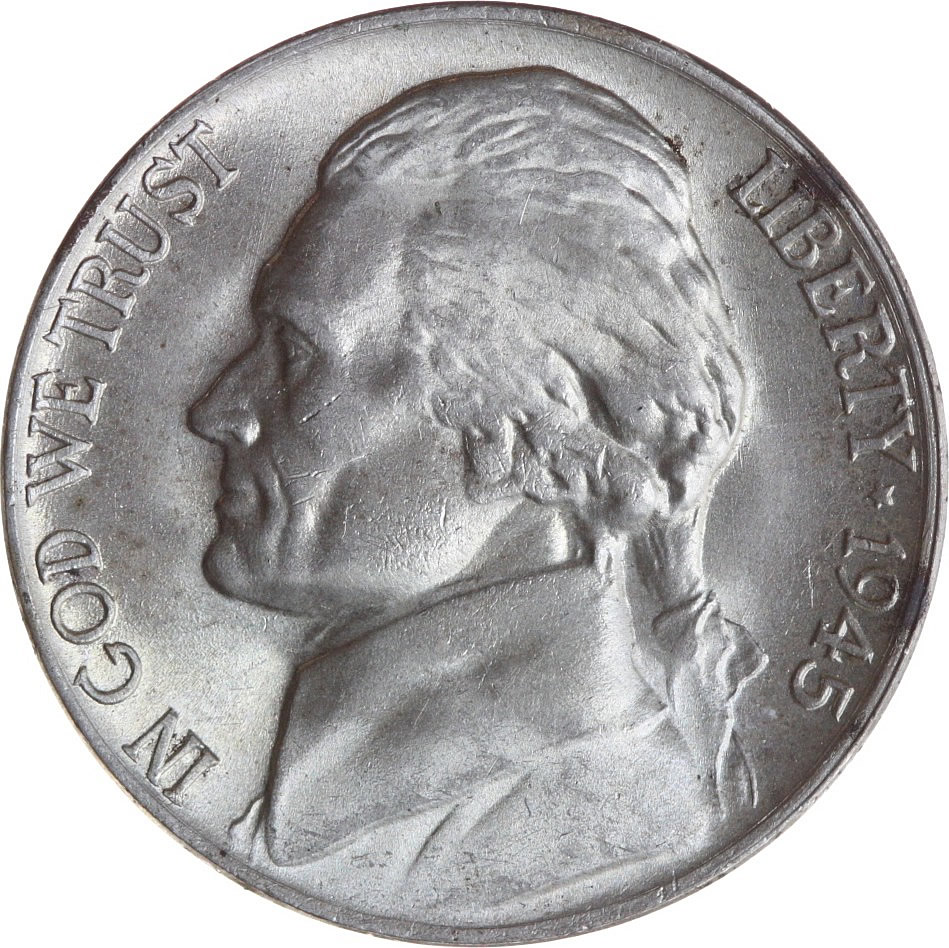
Nickel was a war-critical metal for armor plating, so from October 1942 the five-cent piece switched to 56% copper, 35% silver, 9% manganese. To make the emergency coins easy to pull from circulation later, the Mint moved the mint mark above Monticello and enlarged it — Philadelphia's 'P' appearing on a US coin for the first time in history. They were never systematically withdrawn, which is why sharp-eyed roll hunters still occasionally find 78 times face value hiding in nickel rolls.
The counterfeiter Francis Henning struck fake 1944 nickels but forgot the mandatory large mint mark — the missing 'P' is how they were caught.