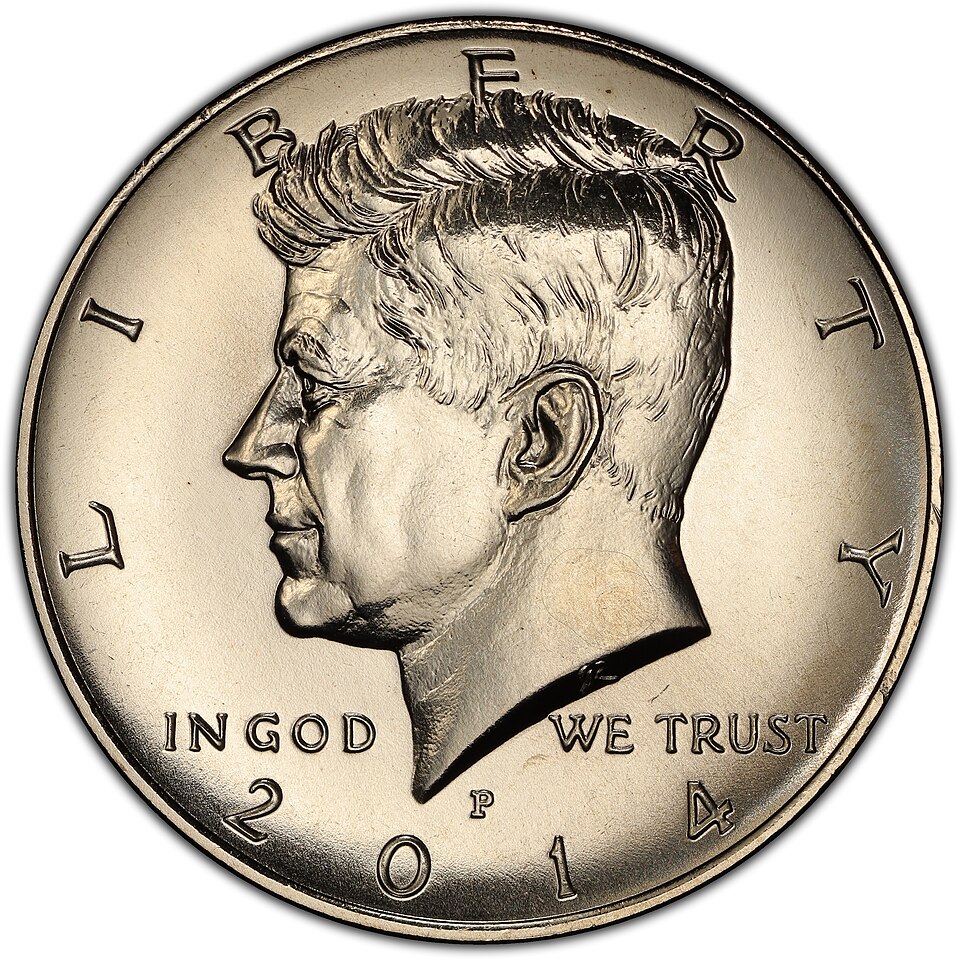
MELT VALUES / MODERN
Kennedy Half Dollar (Clad, 1971– )

Designer
Gilroy Roberts & Frank Gasparro
Years struck
1971–present
Mints
Philadelphia (P), Denver (D), San Francisco (S)
Circulation strikes suspended 2002-2020 (collector-only); resumed 2021.
THE STORY
The half dollar never recovered from the silver-era hoarding: vending machines dropped it, registers had no slot for it, and by 2002 the Mint stopped ordering it for circulation. It survives as ceremony — and as camouflage for the silver versions that still surface in rolls.
Casinos were among the last major users of halves — chips replaced them, and the denomination effectively died in commerce.
KEY DATES WORTH REAL MONEY
Check these before treating any coin as melt.
| 1976 Bicentennial | Drummer-boy reverse; 40% silver versions exist from San Francisco |
| 1998-S Matte | Special finish, 63k pieces |
Think you have one? Check recent auction records before selling — and read our grading basics first.
SPECIFICATIONS
Grading: where wear shows first
Not a factor.
Never clean a coin. Ever. Cleaning permanently destroys collector value — dark original toning is worth more than shiny damage.
Counterfeit check
None. The hunt is for S-mint 40% silver Bicentennials mixed into circulation.
Gear that settles it: an electromagnetic verifier, a calibrated scale and calipers — counterfeit basics.
QUESTIONS PEOPLE ACTUALLY ASK
Is a 1776-1976 Bicentennial half dollar valuable?
Circulation versions: face value. San Francisco silver collector versions: bullion value plus a small premium. The S mint mark is the tell.
Coin image: Wikimedia Commons — Public domain — Professional Coin Grading Service.